
A useful MIM RFQ package combines a controlled 2D drawing, matching 3D CAD file, material or performance requirement, critical tolerances, expected volume, delivered condition, inspection needs, and application background. Together, these inputs let the supplier review metal injection molding suitability, tooling and shrinkage risk, secondary operations, inspection scope, and the assumptions included in the quotation. Missing information can cause suppliers to quote different manufacturing scopes, so the purpose of this guide is to make the project requirements clear before drawing review or formal quotation.
MIM RFQ Essentials
Before requesting a quotation, make sure the supplier can understand the part geometry, functional requirements, material direction, critical features, production demand, and acceptance method.
- Controlled 2D drawing and a matching 3D CAD file
- Material grade or the required performance and working conditions
- Critical dimensions, datums, mating surfaces, sealing faces, and cosmetic surfaces
- Prototype, pilot, annual volume, program life, and target timeline
- Surface finish, secondary operations, inspection reports, and delivered condition
Use drawing review when geometry, tolerance, material, or MIM suitability is still open. Use the formal quote path when the drawing package, volume, delivered condition, and inspection scope are defined. Multi-part or long-term development programs can use the OEM/ODM inquiry path.
What Should Be Included in a MIM RFQ Package?
The RFQ should define more than geometry. It should show what the part must do, which requirements control acceptance, and what production scope the quotation must include.
Provide the latest drawing and CAD revision, material direction, critical tolerances, functional surfaces, and surface requirements.
State prototype and pilot needs, annual volume, expected program life, delivery pattern, timeline, and current development stage.
Identify secondary operations, heat treatment, coating or PVD, inspection methods, report expectations, and application risks.
Choose the Right Submission Path
Select the path that matches the project stage. This guide prepares the information; the linked pages handle the actual quotation, drawing review, or broader project discussion.

This representative engineering illustration explains the decision path and does not depict a specific customer project. Use formal quotation for a defined RFQ package, drawing review for open manufacturability questions, and contact or OEM/ODM inquiry for broader coordination.
Your drawing, CAD file, material direction, volume, delivered condition, and inspection scope are sufficiently defined.
Request a QuoteYour drawing is available, but MIM suitability, geometry, tolerance, material, or secondary machining questions remain open.
Submit Drawing for ReviewUse general contact for an early question, or the OEM/ODM path for multi-part and longer development programs.
Contact XTMIMOEM/ODM Project Inquiry
Minimum RFQ Package for Small Complex MIM Parts
A complete RFQ package does not need to be complicated, but it should remove the most common technical uncertainties. For small complex MIM parts, the supplier usually needs to understand shape, function, material direction, process limits, critical dimensions, and production expectations before giving a meaningful quotation direction.

This representative engineering illustration is for explanation only and does not show a specific customer quotation. The table below is the primary reference for the minimum RFQ package.
| RFQ Input | What to Prepare | Why It Matters |
|---|---|---|
| 2D drawing | PDF drawing with revision, dimensions, tolerances, datums, material notes, surface notes, and inspection notes. | Defines what must be controlled and measured. It is the main reference for quotation scope and acceptance review. |
| 3D CAD file | STEP, Parasolid, SolidWorks, or another usable 3D model that matches the drawing revision. | Helps review geometry, wall thickness, undercuts, parting direction, moldability, and sintering distortion risk. |
| Material requirement | Exact material grade, standard requirement, or performance target. | Affects feedstock selection, sintering route, heat treatment, corrosion resistance, hardness, strength, magnetic behavior, and cost. |
| Critical tolerances | CTQ dimensions, mating features, datum surfaces, functional holes, sealing faces, and assembly interfaces. | Helps separate as-sintered dimensions from features that may require machining, tooling correction, or tighter inspection. |
| Annual volume | Prototype quantity, pilot quantity, estimated annual production, and expected program life. | Affects tooling economics, quotation assumptions, production planning, and unit cost direction. |
| Surface finish | Cosmetic surfaces, functional surfaces, polishing, passivation, coating, PVD, or appearance expectations. | Affects gate and parting line review, finishing scope, acceptance criteria, and cost. |
| Secondary operations | Machining, tapping, reaming, heat treatment, polishing, coating, or other post-sintering processes. | Defines the delivered condition and prevents the quote from excluding required finishing work. |
| Inspection requirement | CMM report, first article inspection, hardness check, material report, functional gauge, or visual inspection requirement. | Affects inspection planning, approval process, reporting cost, and lead time. |
| Application background | Load, wear, motion, corrosion, temperature, assembly method, working environment, and failure concern. | Helps the engineering team review material direction, geometry risk, process suitability, and delivered-condition requirements. |
A 3D CAD file shows the part shape, but it does not replace the 2D drawing. The 2D drawing defines what must be controlled, which dimensions are critical, what material is expected, and how the finished part should be inspected. If the CAD and drawing are not the same revision, the quotation may be based on the wrong geometry or tolerance scheme.
How Missing RFQ Inputs Change Quotation Assumptions
Incomplete RFQ information does not only slow down communication. It can also cause suppliers to quote different manufacturing scopes. From a purchasing perspective, those quotes may look comparable. From an engineering perspective, they may describe different delivered parts.
| Missing RFQ Input | Likely Quotation Risk | Recommended Fix Before Submission |
|---|---|---|
| No 2D drawing | Supplier may miss CTQ dimensions, datums, threads, surface notes, material notes, or inspection criteria. | Send a controlled PDF drawing with revision level and the latest requirement notes. |
| No matching 3D CAD file | Geometry review may miss undercuts, thin walls, blind features, mold direction risks, or local distortion risks. | Send STEP, Parasolid, or another usable CAD file matching the latest drawing. |
| No material requirement | Supplier may assume the wrong alloy system, heat treatment condition, corrosion level, hardness target, or magnetic behavior. | Provide the exact grade or describe performance requirements and working conditions. |
| No annual volume | Tooling strategy, cavity planning, amortization, and production economics may be unclear. | Separate prototype quantity, pilot quantity, annual volume, and expected program life. |
| No critical tolerance marking | Quote may exclude machining, tight inspection, or additional process control needed for functional features. | Mark CTQ dimensions, datum features, mating interfaces, and function-critical holes or surfaces. |
| No surface requirement | Gate mark, parting line, polishing, coating, PVD, or cosmetic expectations may not be included. | Mark visible, sealing, sliding, and mating surfaces before quotation. |
| No inspection requirement | CMM, FAI, hardness, material report, or functional checks may be excluded from the quotation scope. | Define inspection scope, report expectations, and approval requirements. |
| No application background | Material, process, tolerance, or surface decisions may be made without understanding real working conditions. | Explain load, wear, corrosion, motion, temperature, assembly context, and failure concerns. |
A reliable RFQ should make the supplier’s assumptions visible. If two quotations are based on different material, machining, inspection, or finishing assumptions, the lower price may not represent the same manufacturing scope.
What Each RFQ Input Should Include
2D Drawing and 3D CAD File
For a MIM quotation, the 2D drawing and 3D CAD file should be used together. The 3D CAD file helps review shape, wall thickness, undercuts, slots, holes, parting direction, mold action, and possible sintering distortion. The 2D drawing defines dimensions, tolerances, datums, material notes, surface notes, inspection requirements, and revision status.
If only a STEP file is provided, XTMIM can perform an initial feasibility discussion, but the quotation may still require drawing clarification before tooling or production planning. For drawing-first communication, use Submit Drawing for Review.
Material or Performance Requirement
If the material has already been specified, include the exact grade or standard requirement in the RFQ package. This is important when the part must meet strength, hardness, corrosion resistance, magnetic behavior, wear resistance, temperature, or customer-approved documentation requirements.
If the material is not finalized, provide the performance requirements instead. Useful information includes working environment, contact fluids, corrosion exposure, wear condition, mechanical load, hardness target, magnetic requirement, temperature range, and surface treatment expectation. For broader material direction, review MIM materials.
Critical Tolerances and Functional Surfaces
Not every dimension needs the same level of control. In MIM quotation, the most useful drawing clearly separates general dimensions from critical-to-quality dimensions. Before tooling, the key question is which features control fit, assembly, movement, sealing, alignment, or load transfer.

This representative engineering illustration does not depict a specific XTMIM customer part. Critical surfaces, holes, slots, thin sections, and measurement access can change tooling, secondary operation, and inspection assumptions.
Mark features that affect assembly, sealing, rotation, sliding, alignment, press fit, load transfer, or functional movement. Also mark cosmetic surfaces, mating surfaces, sealing faces, visible surfaces, and surfaces where gate marks, parting lines, or ejector marks may be unacceptable.
This helps the supplier judge whether the part can remain as-sintered or whether certain features need machining, grinding, polishing, or additional inspection after sintering. For deeper tolerance guidance, review MIM tolerances.
Annual Volume and Project Stage
MIM typically involves tooling, sampling, process tuning, and production validation. Therefore, the quotation depends not only on the part design, but also on project stage and production volume. Prototype quantity, pilot quantity, and annual production demand should not be merged into one vague number.

This representative engineering illustration is not a record of a specific production program. Separate prototype quantity, pilot demand, annual volume, and program life because each affects tooling, cost, and production assumptions.
Separate the quantity information into prototype quantity, pilot or trial quantity, estimated annual volume, expected program life, and batch size or delivery frequency if known. Prototype quantity alone is not enough to judge MIM production economics. A part may be technically suitable for MIM, but the tooling investment must still make sense for the expected production volume.
Secondary Operations and Inspection Scope
The as-sintered MIM part may not be the final delivered condition. Some features may require machining, tapping, reaming, polishing, passivation, heat treatment, coating, or PVD depending on material, tolerance, surface, and application requirements.
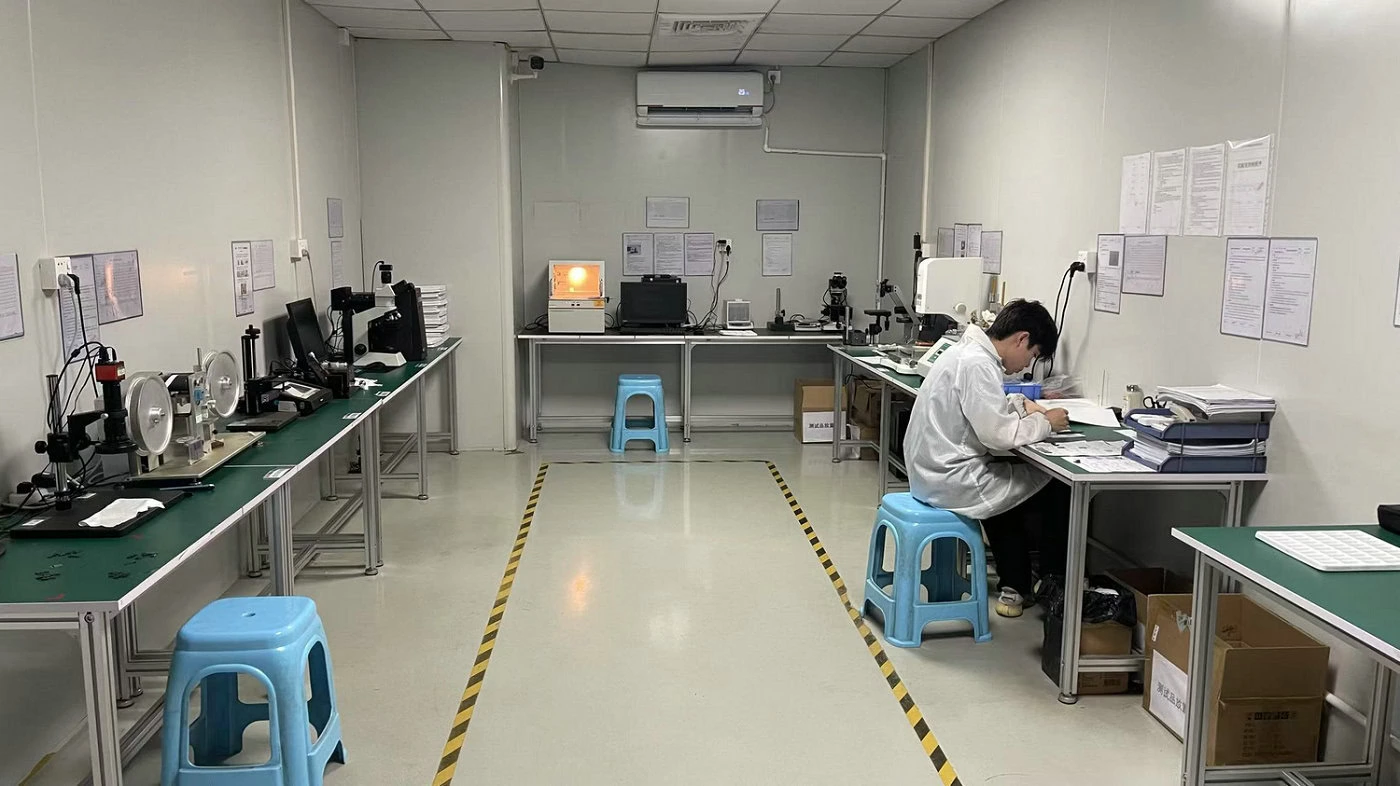
Actual XTMIM factory evidence. The inspection method, reporting scope, sampling frequency, and acceptance criteria remain project-specific and should be defined before quotation.
Inspection scope should also be defined before quotation. Some projects only need key dimensional checks. Others may require CMM reports, first article inspection, hardness checks, material reports, visual inspection, functional gauges, or customer-specific approval documentation.
For related capabilities, review XTMIM capabilities, inspection and testing, and quality control.
Application Background
Application background helps the engineering team understand why the part is designed this way and what risks should be reviewed before quotation. Useful background information includes product application, assembly function, load condition, wear or friction condition, corrosion environment, working temperature, motion or sliding requirement, cosmetic requirement, failure concern, and any replacement process such as CNC, casting, stamping, or plastic injection molding with metal insert.
This information helps XTMIM review whether MIM is suitable, which material direction may be reasonable, which features may need adjustment, and which quotation assumptions should be clarified early.
How XTMIM Reviews Your RFQ Package
After receiving your RFQ package, XTMIM reviews the project from an engineering and production perspective before quotation assumptions are finalized. The review is not only a price check. It is an early filter for MIM suitability, tooling risk, material direction, tolerance strategy, secondary operations, and inspection scope.
Review whether the part geometry, volume, material direction, and functional requirements fit the metal injection molding route.
Review wall thickness, holes, slots, undercuts, mold direction, gate location risk, green part handling, and features that may need design adjustment.
Check whether the requested material or performance target is realistic for feedstock selection, debinding, sintering, heat treatment, and final use.
Review whether critical features can remain as-sintered or may require secondary machining and additional inspection.
Clarify machining, heat treatment, polishing, coating, passivation, PVD, or other delivered-condition requirements.
Review CMM, FAI, hardness, material reporting, visual inspection, functional gauges, and approval documentation needs.
This review does not replace final sample validation or customer approval. It helps identify important questions before tooling, trial production, or production quotation.
Common RFQ Mistakes That Delay Quotation
Several RFQ mistakes can delay the quotation process or lead to unclear pricing. Most delays are not caused by a lack of supplier willingness to quote. They are caused by missing assumptions that affect tooling, material, tolerance, machining, inspection, or delivered condition.
| RFQ Mistake | Why It Delays Quotation | Better RFQ Practice |
|---|---|---|
| Sending only a STEP file | No tolerances, datums, material notes, or inspection criteria are visible. | Send both 2D drawing and 3D CAD file. |
| Asking for price before defining requirements | Supplier cannot confirm material, tolerance, volume, or delivered condition. | Prepare the minimum RFQ package first. |
| No annual volume | Tooling economics and production planning cannot be evaluated. | Separate prototype, pilot, and annual quantity. |
| All dimensions are tightly toleranced | Quote may include unnecessary machining or inspection. | Mark only function-critical dimensions clearly. |
| No surface requirement | Gate mark, parting line, polishing, coating, or cosmetic expectations may be unclear. | Mark visible and functional surfaces. |
| No secondary operation information | Machining, heat treatment, coating, or polishing may be excluded. | Define the delivered condition. |
| No inspection expectation | Reports, gauges, CMM checks, or FAI may be excluded. | Define critical inspection and documentation needs. |
| Drawing revision is not controlled | Supplier may quote an outdated geometry or tolerance scheme. | Provide the latest drawing revision and matching CAD file. |
Representative RFQ Scenario: Why STEP-Only Quotations Become Incomparable
This representative scenario combines common RFQ problems and does not describe a specific customer project.
- Problem
- A buyer sent only a STEP file for a small locking component and received quotations that were difficult to compare.
- Why the quotations differed
- The model showed shape but did not define critical tolerances, datum logic, material direction, cosmetic surfaces, inspection reports, annual volume, or delivered condition. Each supplier therefore priced a different manufacturing scope.
- How the RFQ was clarified
- The buyer added a controlled 2D drawing, marked the pivot hole and contact face, clarified material performance and annual volume, and defined inspection expectations.
- How to prepare a comparable RFQ
- Use the 3D file to define geometry and the controlled drawing and RFQ notes to define function, critical requirements, delivered condition, and acceptance.
Before You Submit: RFQ Preparation Checklist
Prepare the following information where available. When a requirement is still open, identify it clearly so the quotation can state the assumption instead of hiding it.
- Current controlled 2D drawing and matching 3D CAD file
- Material grade or required performance and working conditions
- Critical dimensions, datums, functional surfaces, and cosmetic surfaces
- Prototype, pilot, annual volume, program life, and target timeline
- Surface finish and expected delivered condition
- Machining, heat treatment, coating, PVD, or other secondary operations
- Inspection method, report, gauge, or customer approval requirements
- Application function, load, wear, corrosion, temperature, motion, and assembly constraints
- Known open questions or requirements that still need engineering review
- NDA or confidentiality requirements when applicable
When some details are still open: You can still contact XTMIM, but identify which requirements are confirmed and which remain undecided. For broader pre-project tools, use the MIM project checklists.
Send the Right Package for the Right Review
Request a formal quotation when the package is defined, use drawing review when manufacturability questions remain, or use the OEM/ODM inquiry path for multi-part and longer development programs.
Frequently Asked Questions
Is a 3D CAD file enough for a MIM quotation?
A 3D CAD file can support an initial feasibility discussion, but it is usually not enough for a reliable MIM quotation. The supplier also needs a controlled 2D drawing with tolerances, datums, material notes, surface requirements, inspection expectations, and revision status.
Do I need to know the exact MIM material before submitting an RFQ?
Not always. Provide the exact grade when it is specified. When the material is still open, provide the required strength, hardness, corrosion resistance, wear behavior, magnetic performance, working temperature, and surface treatment conditions.
What if the annual volume is not finalized yet?
Provide the best available range and separate prototype, pilot, and possible annual production demand. Even an estimated range helps evaluate tooling economics, cavity planning, and whether MIM is commercially reasonable.
Can I submit only a sample or an old drawing?
You can start an initial discussion, but a reliable quotation normally requires a controlled drawing and CAD file. Explain which dimensions, material, function, appearance, and delivered condition must be reproduced, and identify any information that is not yet confirmed.
Should I mark critical tolerances before quotation?
Yes. Mark dimensions that control fit, assembly, movement, sealing, alignment, or load transfer. This helps determine whether a feature can remain as-sintered or may require machining and additional inspection.
Should secondary operations be included in the RFQ?
Yes. Define required machining, tapping, reaming, heat treatment, polishing, coating, PVD, passivation, and other post-sintering work so the quotation reflects the expected delivered condition.
Technical references
MIM quotation should be based on project-specific engineering review, but recognized technical references can help buyers and engineers communicate material, process, and drawing expectations. Useful references include the MIMA Design Center for MIM design and suitability context, the Metal Powder Industries Federation for powder metallurgy and MIM industry standards context, ASTM B883 for ferrous MIM material specification context, and ISO 2768-1 when a drawing uses general tolerances.
These references support communication, but they do not replace project-specific MIM DFM review, material datasheets, supplier process capability, or formal customer requirements.