MIM Material Property Guide
Heat Treatable MIM Materials
Heat treatable MIM materials are selected when a metal injection molding project needs post-sintering improvement in strength, hardness, wear resistance, or mechanical response. The correct choice depends on alloy family, sintered density, carbon control, part geometry, dimensional risk, and final inspection requirements.
Quick answer: Common heat treatable MIM materials include precipitation-hardening stainless steels, martensitic stainless steels, and low-alloy steels. They are useful when a small complex MIM part needs higher strength, hardness, or wear resistance after sintering. However, heat treatability is not a performance guarantee. The final result depends on the alloy system, sintered condition, carbon balance, wall thickness, distortion risk, post-treatment dimensions, and how the part will be inspected. Before tooling, the drawing should confirm the functional surface, target property, tolerance after treatment, service environment, annual volume, and acceptance method.
Strength, hardness, wear resistance, or mechanical response after sintering is a key part requirement.
Alloy family, geometry, sintered density, carbon control, distortion risk, and final inspection condition.
A heat treatable alloy does not automatically mean the finished MIM part will meet every hardness or tolerance requirement.
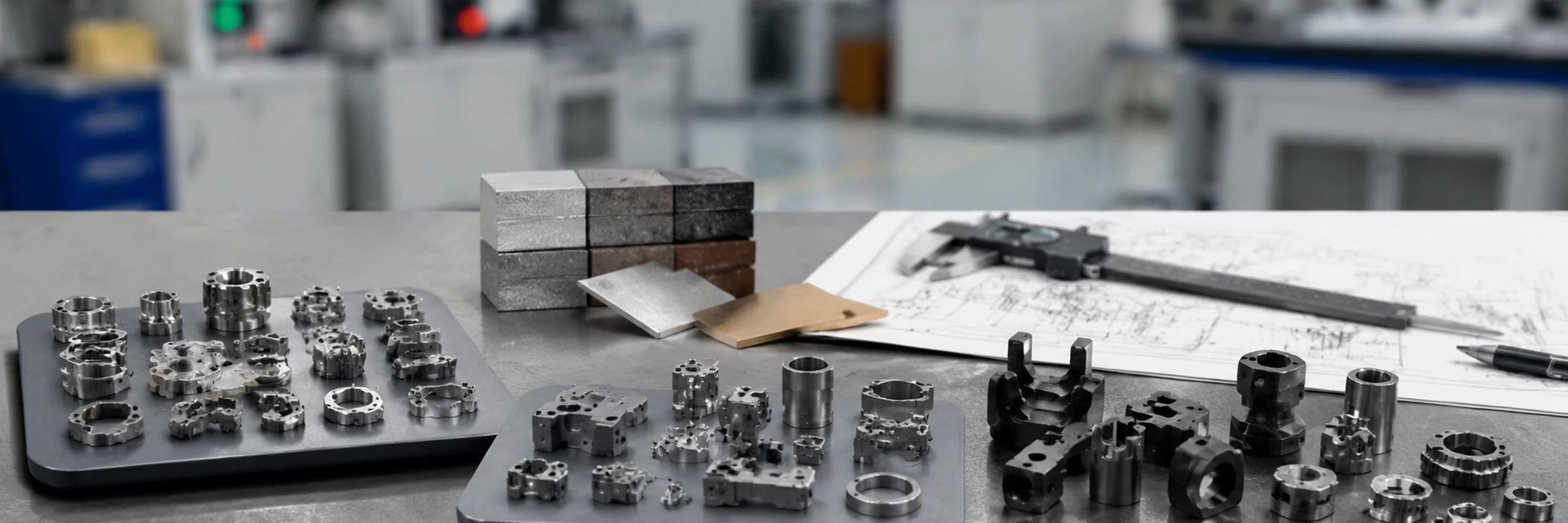
Core conclusion: Heat treatability is a material selection factor, not a standalone guarantee of final MIM part performance.
What Are Heat Treatable MIM Materials?
Heat treatable MIM materials are selected when the project needs a controlled change in mechanical properties after the part has been molded, debound, and sintered. Heat treatment may be used to improve strength, increase hardness, adjust wear resistance, or create a more suitable balance between hardness and toughness. In a MIM project, the review should start from the alloy family, not from the heat treatment step alone.
This matters because MIM parts are not machined from wrought bar stock. They are formed from metal powder and binder, go through debinding, and shrink during sintering. The final microstructure, density, carbon balance, and part shape all influence how the material responds to later heat treatment. A material that is heat treatable in general may still create dimensional or quality risks when used in a thin-wall, asymmetric, or tight-tolerance MIM part.
Heat treatability after sintering
In MIM, heat treatment usually happens after sintering, because the part must first reach its final metallurgical condition and near-final density. The route may include strengthening, hardening, aging, tempering, or other controlled thermal processes depending on the alloy system.
Why MIM review is different
A MIM part starts from powder-based feedstock and reaches final shape through molding, debinding, sintering shrinkage, and possible secondary operations. Heat treatment should therefore be reviewed together with sintering route, geometry stability, machining allowance, and final inspection.
Engineering review rule: Do not start with “what hardness can this grade reach?” Start with “which functional surface needs the property, what geometry must remain stable, and how will the final part be accepted?” For process-level details, review the separate MIM heat treatment page.
Which MIM Material Families Are Commonly Heat Treatable?
Heat treatable MIM materials are commonly found in three broad material groups: precipitation-hardening stainless steels, martensitic stainless steels, and low-alloy steels. These groups are often considered when the application requires strength, hardness, wear resistance, or a more controlled mechanical response after sintering.
Industry material references support this family-level approach. MIMA describes MIM as compatible with many common engineering alloys and identifies 17-4 PH and 316L as widely used MIM stainless materials. ISO 22068 coverage, as summarized by PIM International, includes low-alloy steels and stainless steels in as-sintered and heat-treated conditions. MPIF Standard 35-MIM also provides MIM material standards for design and materials engineers. MIMA Materials Range, ISO 22068 overview, MPIF Standard 35-MIM notice.
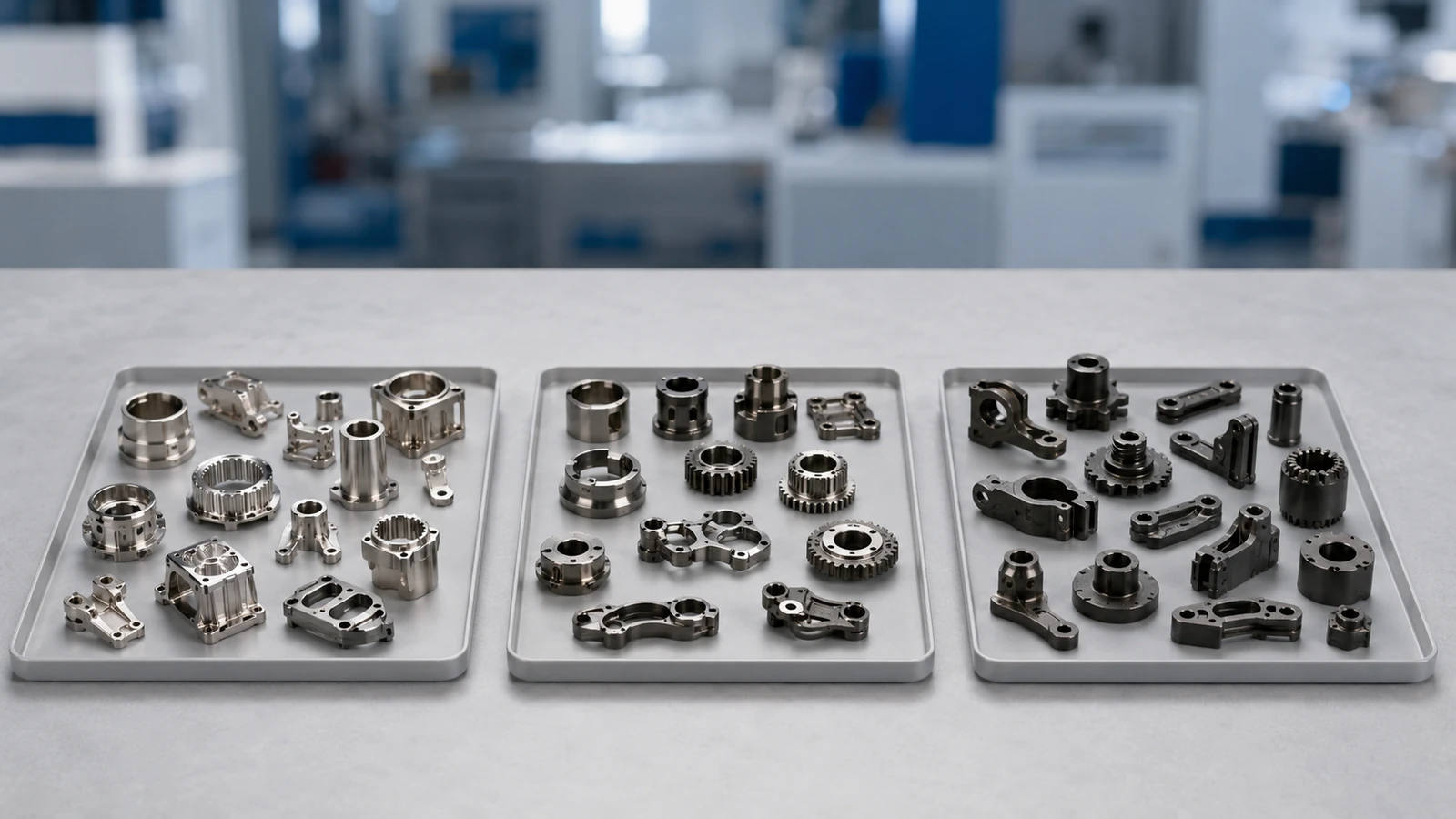
Core conclusion: Heat treatable MIM material selection should start from material family, not only from a target hardness value.
| Material family | Typical heat treatment purpose | Typical MIM review concern | When to consider |
|---|---|---|---|
| Precipitation-hardening stainless steel | Strength and controlled mechanical response | Aging response, distortion risk, corrosion requirement | When strength is required with stainless steel behavior |
| Martensitic stainless steel | Hardness and wear resistance | Hardening response, toughness balance, corrosion limits | When hardness or wear resistance is more important than maximum corrosion resistance |
| Low-alloy steel | Strength, hardness, toughness, and wear response | Carbon control, density, distortion, surface condition | When mechanical performance and cost balance are more important than stainless corrosion resistance |
| Austenitic stainless steel | Usually not selected mainly for hardening | Limited hardening response through conventional heat treatment | When corrosion resistance and ductility are more important than hardening |
| Soft magnetic alloys | Usually not selected for hardening | Magnetic performance may conflict with hardening goals | When magnetic response is the design driver |
Material review gates before selecting a grade
1. Functional requirement
Confirm whether the part needs strength, hardness, wear resistance, corrosion behavior, magnetic response, or another material property. A vague request for “strong material” is not enough for MIM material selection.
2. Geometry risk
Review thin walls, long unsupported features, holes, slots, sharp transitions, and uneven mass distribution. Heat treatment benefit may be limited if the part shape creates unacceptable movement.
3. Final acceptance
Define whether dimensions, hardness, and surface condition are checked after sintering, after heat treatment, or after secondary operations. This affects tooling compensation and inspection planning.
For a structured material review path, use the material selection checklist to compare functional requirements, candidate materials, operating environment, and inspection expectations before confirming a heat treatable route.
The key decision is not simply whether the material can be heated. The question is whether the material system can respond to the selected thermal route in a way that supports the drawing requirement, functional requirement, and inspection plan. Broader material property paths are covered in MIM material properties.
Heat Treatable Stainless Steel MIM Materials
Stainless steel MIM projects can involve very different heat treatment logic depending on the grade. The most important distinction is between precipitation-hardening stainless steels, martensitic stainless steels, and austenitic stainless steels. These groups should not be treated as interchangeable just because they are all stainless steels.
17-4 PH is a precipitation-hardening stainless steel family, and published technical literature shows that precipitation-hardening heat treatment can increase strength and hardness in 17-4 PH stainless steel. For MIM RFQ review, this supports the material-family logic, but exact values must still be confirmed by grade, condition, sintered density, and test method. 17-4 PH precipitation-hardening study.
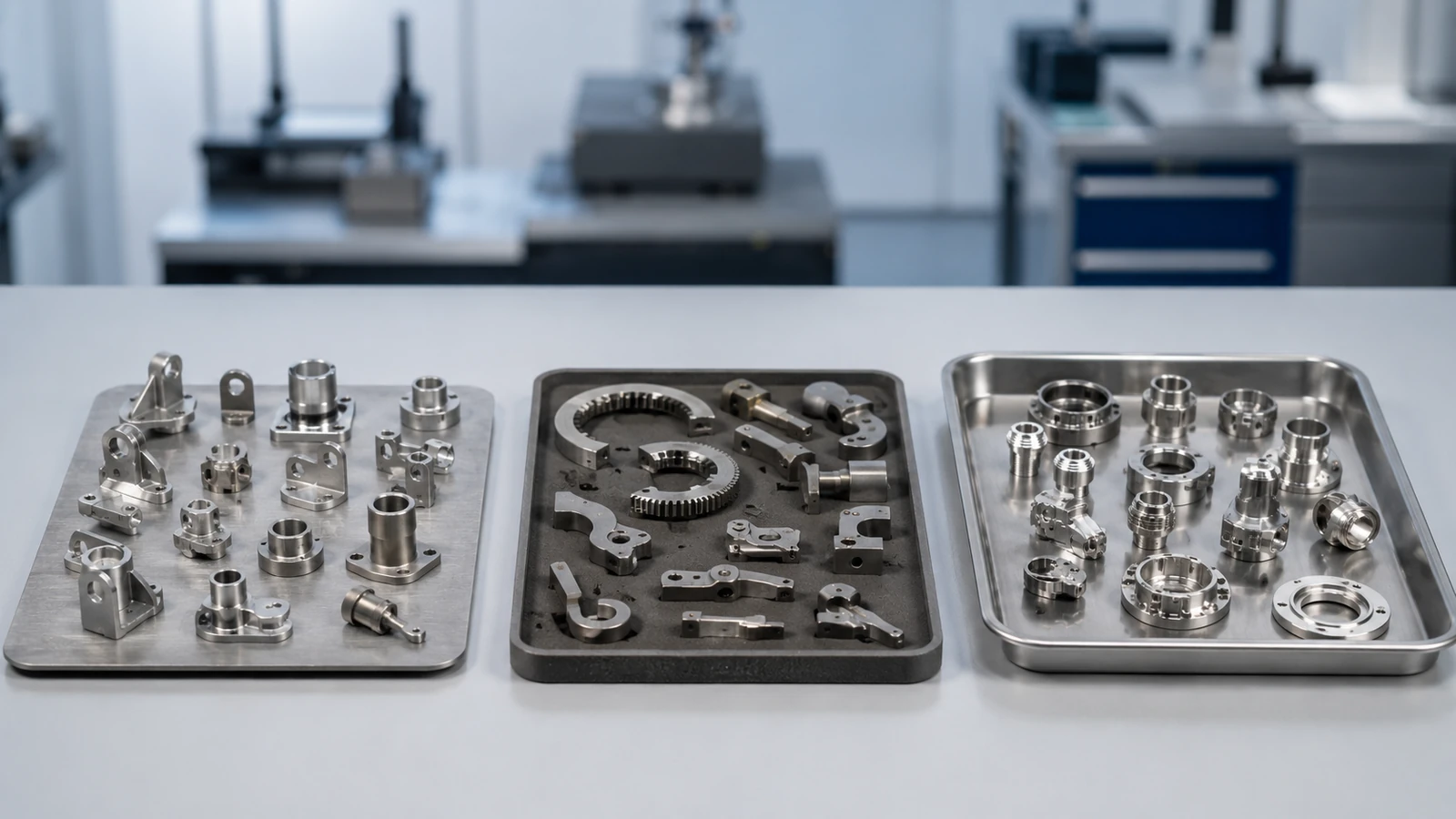
Core conclusion: 17-4 PH, 420, and 440C are more relevant to heat treatment response than 304 or 316L, which are usually selected for corrosion resistance.
17-4 PH for strength
17-4 PH stainless steel is commonly reviewed when a MIM part needs a stainless steel option with improved strength through a precipitation-hardening route. Before tooling, confirm the strength requirement, corrosion environment, aging expectation, dimensional tolerance after treatment, and whether any final machining or sizing is required.
420 and 440C for hardness
420 stainless steel and 440C stainless steel are more commonly associated with hardness and wear-resistance requirements. The review should include toughness balance, edge condition, corrosion limits, functional surfaces, and post-treatment finishing needs.
304 and 316L are different
304 and 316L stainless steels are widely used in MIM, but they are usually selected for corrosion resistance and general stainless behavior rather than post-sintering hardening. If the part needs both corrosion resistance and high hardness, the project should be reviewed as a material trade-off.
Stainless selection caution: If the drawing says “stainless steel” but also requires high hardness, the inquiry should be clarified before quotation. The project may need a precipitation-hardening or martensitic stainless route rather than an austenitic stainless route.
Heat Treatable Low-Alloy Steel MIM Materials
Low-alloy steel MIM materials are often considered when the project requires strength, hardness, toughness, or wear response and stainless corrosion resistance is not the primary driver. These materials can be suitable for functional components, structural small parts, mechanical engagement features, or cost-sensitive parts that need a stronger mechanical route after sintering.
For family-level routing among 4605, 4140, 4340, Fe-2Ni, Fe-4Ni, and Fe-8Ni options, review the MIM low alloy steel materials page before moving to grade-specific property and heat-treatment data.
4605 for general strength-oriented MIM parts
4605 low alloy steel is commonly reviewed for strength-oriented MIM components. It can be practical when the part needs mechanical performance beyond a basic stainless selection but does not require stainless corrosion resistance.
4140 and 4340 for higher mechanical requirements
4140 low alloy steel and 4340 low alloy steel may be reviewed when the application requires a higher mechanical response. The material name alone does not confirm that the final part will meet the intended property, tolerance, and inspection requirement.
| Low-alloy review point | Why it matters in MIM | RFQ question to clarify |
|---|---|---|
| Carbon and sintering condition | Mechanical response may depend on the controlled material route and final sintered condition | Is the drawing asking for a function, a hardness range, or a named grade? |
| Wall thickness and feature stability | Hardening benefit may be offset by dimensional movement in thin or asymmetric parts | Which dimensions are critical after heat treatment? |
| Surface finishing or machining | Functional surfaces may require post-treatment control | Are holes, flats, contact faces, or assembly features inspected after treatment? |
Low-alloy steel heat treatment should be reviewed with carbon control, sintering condition, wall thickness, functional surfaces, and final inspection. If the drawing includes high hardness and tight geometry at the same time, machining allowance or sizing strategy may need to be considered before tooling.
What Performance Can Heat Treatment Improve in MIM Parts?
Heat treatment may improve strength, hardness, wear resistance, and mechanical response in suitable MIM materials. However, it does not improve every property at the same time. The same treatment route that increases hardness may also affect toughness, distortion risk, surface finishing requirements, or inspection cost.
| Performance goal | Material direction often reviewed | Engineering benefit | Review risk |
|---|---|---|---|
| Higher strength | 17-4 PH, low-alloy steels | Improved load-bearing response | Distortion, property verification, tolerance after treatment |
| Higher hardness | 420, 440C, low-alloy steels | Better surface durability and wear response | Toughness balance, edge condition, finishing needs |
| Wear resistance | Martensitic stainless steels, low-alloy steels | Improved contact surface performance | Surface finish, contact stress, inspection method |
| Dimensional stability after treatment | Material and geometry dependent | More predictable final assembly fit | Thin features, asymmetric geometry, post-treatment measurement |
| Corrosion + strength balance | 17-4 PH or other stainless options | Stainless behavior with improved mechanical response | Environment-specific corrosion review |
Heat treatment response should be treated as grade- and condition-specific. ISO 22068 coverage for sintered-metal injection-moulded materials includes both as-sintered and heat-treated conditions for certain material groups, which supports checking the material specification and final inspection method instead of relying on a generic hardness assumption. ISO 22068 overview.
When strength is the main driver, review load direction, wall thickness, stress concentration, and expected service condition. When hardness or wear resistance is the driver, identify the working surface, contact condition, expected friction or engagement area, and whether the whole part needs the same condition.
Heat treatment should not be used to compensate for an unsuitable material choice, unstable geometry, unclear drawing requirement, or missing inspection plan. If the part function is unclear, material selection should be paused until the functional surface and final acceptance condition are defined.
MIM-Specific Risks When Selecting Heat Treatable Materials
The main risk in heat treatable MIM materials is assuming that material capability automatically becomes part capability. A heat treatable alloy must still pass through feedstock behavior, molding, debinding, sintering shrinkage, heat treatment, possible secondary operations, and final inspection.
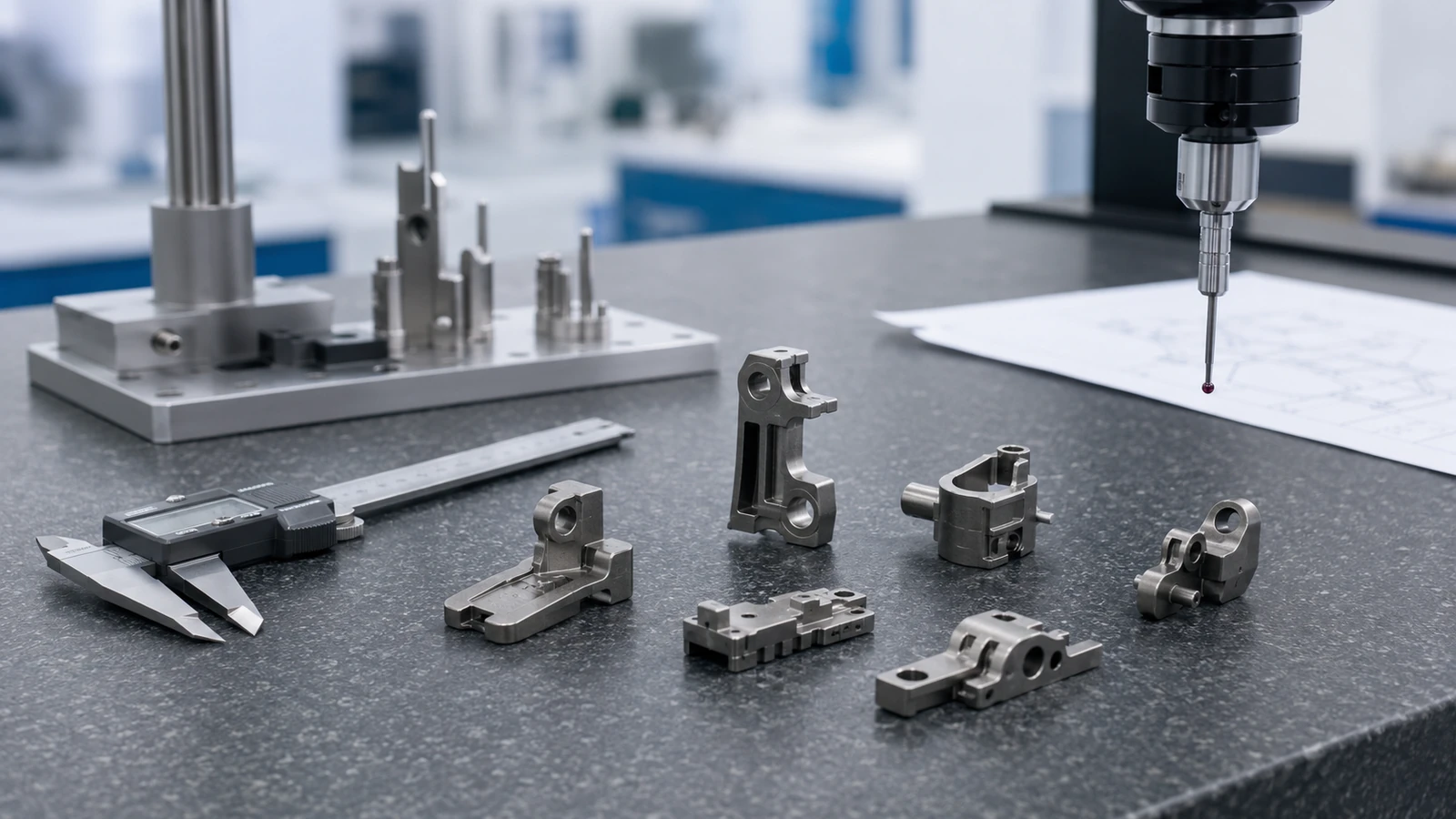
Core conclusion: A heat treatable alloy may be suitable, but the MIM part geometry must still remain stable through the full process route.
| Risk area | Why it matters | What to confirm before RFQ or tooling |
|---|---|---|
| Distortion | Heat treatment may add movement to parts already affected by sintering shrinkage | Wall thickness, unsupported features, datum plan, tolerance after treatment |
| Carbon control | Low-alloy and hardenable materials may be sensitive to carbon balance | Material route, sintering condition, heat treatment expectation |
| Density and porosity | Mechanical consistency depends on sintered condition | Density expectation, critical load areas, inspection method |
| Surface condition | Hardness or wear performance may depend on surface finish | Functional surfaces, finishing need, machining allowance |
| Inspection | Final acceptance must match final condition | Hardness test location, dimensional inspection stage, drawing notes |
| Cost and lead time | Heat treatment and inspection add process steps | Annual volume, batch requirements, secondary operation plan |
Before tooling review gates
Part geometry gate
Confirm whether thin walls, long arms, holes, slots, flatness requirements, or asymmetric features create distortion risk after sintering and heat treatment.
Inspection gate
Confirm where hardness is tested, which dimensions are measured after treatment, and whether functional surfaces need post-treatment finishing or machining.
For dimension-driven projects, review the tolerance and shrinkage checklist before confirming post-treatment dimensions, datum strategy, and inspection stage.
The correct question is not only “can this material be heat treated?” It is “can this part geometry remain within requirement after molding, debinding, sintering, heat treatment, and final inspection?”
When Should You Choose a Heat Treatable MIM Material?
Choose a heat treatable MIM material when the application requires a mechanical property that the sintered condition alone may not provide, and when the part geometry can support the full processing route. Avoid choosing a heat treatable material only because it sounds stronger or harder. The material should match the actual functional requirement.
| Project requirement | Material direction to review | Use heat treatable material? | What to confirm |
|---|---|---|---|
| Stainless part with higher strength | 17-4 PH or similar PH stainless route | Often yes | Strength requirement, corrosion environment, aging condition, tolerance |
| Small wear-contact part | 420, 440C, or low-alloy steel | Often yes | Contact surface, hardness need, toughness, finishing |
| General corrosion-resistant part | 304 or 316L | Usually not for hardening | Corrosion environment, surface finish, passivation or finishing route |
| High hardness with tight geometry | Martensitic stainless or low-alloy steel | Possible, but review carefully | Distortion, machining allowance, inspection stage |
| Magnetic function | Soft magnetic materials | Usually no | Magnetic properties, annealing route, magnetic testing |
| High-temperature service | Heat-resistant material route | Not the same topic | Service temperature, oxidation, creep, or thermal exposure requirement |
Boundary note: Heat treatable materials and heat-resistant materials are different topics. Heat treatable materials are selected for post-sintering property adjustment. Heat-resistant materials are selected for service exposure at elevated temperature. Do not use one requirement to replace the other during RFQ review.
If final strength is the main requirement, compare this page with high-strength MIM materials. If final hardness or wear resistance is the main requirement, review high-hardness MIM materials. This page focuses on heat treatability as the material selection path.
RFQ Information Needed for Heat Treatable MIM Materials
A useful RFQ for heat treatable MIM materials should include more than the material name. The supplier needs to understand the function of the part, the target property, the geometry risk, and the final inspection condition.
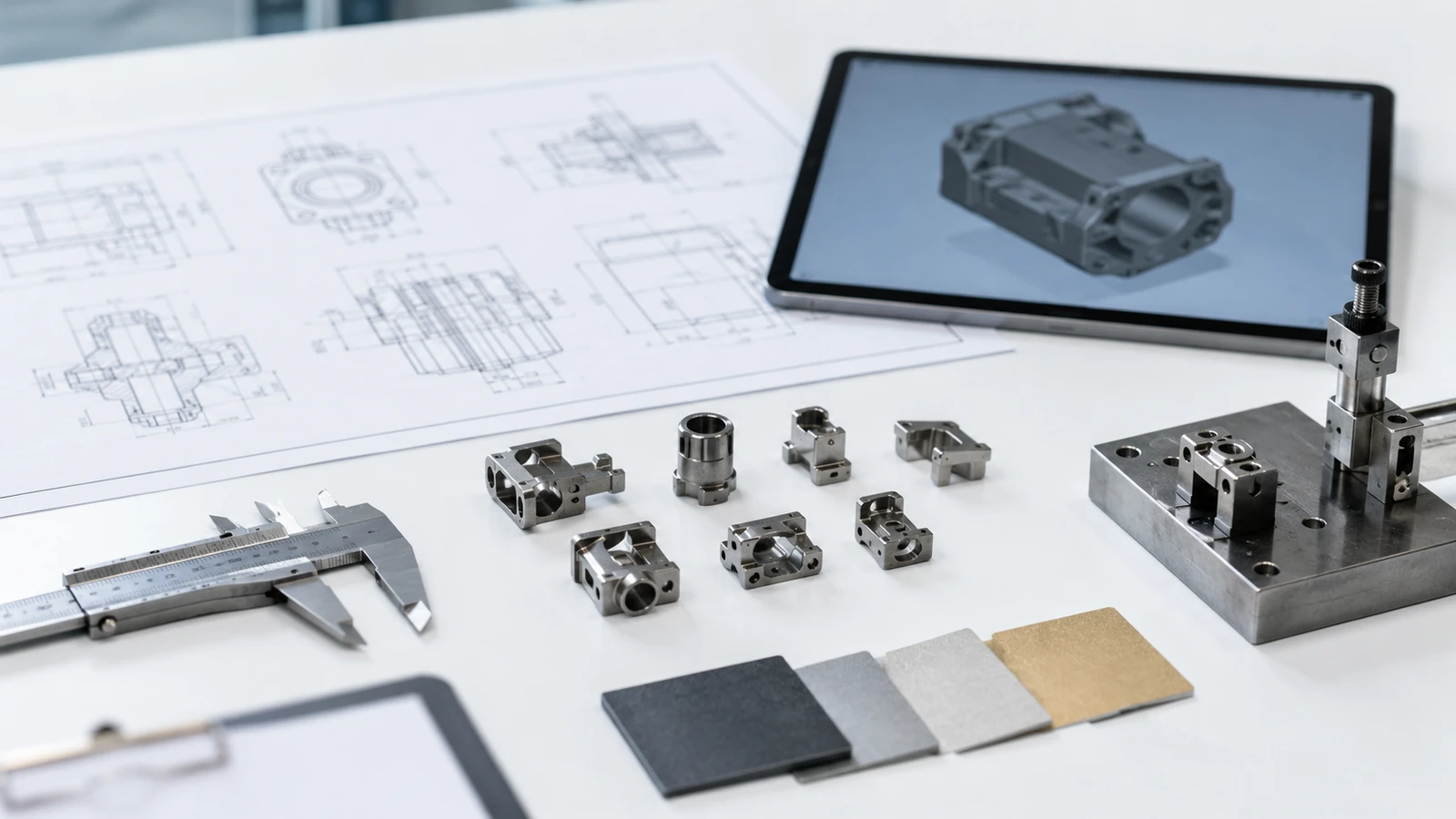
Core conclusion: The more clearly the heat treatment requirement is defined, the easier it is to review material choice, dimensional risk, and production feasibility.
| RFQ input | Why it matters |
|---|---|
| 2D drawing | Defines dimensions, tolerances, datum structure, and inspection requirements |
| 3D model | Helps review geometry, wall thickness, undercuts, and moldability |
| Candidate material or property target | Clarifies whether the project is driven by strength, hardness, wear, corrosion, or cost |
| Target hardness or strength | Helps review heat treatment route and inspection plan |
| Functional surfaces | Identifies where wear, load, sealing, or contact performance matters |
| Corrosion or service environment | Prevents selecting a hardenable material that fails the environment |
| Post-treatment dimensions | Clarifies whether tolerances apply after heat treatment |
| Annual volume | Helps judge whether tooling and secondary operations are justified |
| Inspection method | Connects material selection to quality acceptance |
RFQ review tip: If the drawing only lists a material grade and target hardness, add the functional surface, measurement location, required condition after treatment, and final inspection method. This reduces quotation uncertainty and helps identify whether sizing, machining, or additional inspection should be planned.
Send the Right Inputs for a Heat Treatable MIM Material Review
Share your drawing, 3D model, candidate material, target hardness or strength, service environment, tolerance requirement, annual volume, and inspection criteria. XTMIM can review whether the heat treatable material route is suitable before tooling.
Composite Field Scenario for Engineering Training
A small MIM locking component is submitted with a high hardness requirement and several thin engagement features. The buyer initially requests a stainless material but does not specify whether the requirement is driven by corrosion resistance, wear resistance, or load-bearing function. During engineering review, the material choice is separated into three questions: whether the part needs stainless corrosion behavior, whether the engagement surfaces need higher hardness, and whether the thin features can remain stable after sintering and heat treatment.
The review does not start by selecting the hardest material. It starts by identifying the function of each feature, the final dimensions after treatment, the inspection method, and whether post-treatment finishing is needed. In this type of project, a heat treatable MIM material may be suitable, but only after the material route, geometry risk, and final acceptance condition are reviewed together.
FAQs About Heat Treatable MIM Materials
Are all MIM materials heat treatable?
No. Some MIM materials can respond to post-sintering heat treatment, but many materials are selected for other reasons such as corrosion resistance, magnetic response, conductivity, density, or biocompatibility. The project should review the alloy family and performance goal before assuming that heat treatment is the correct route.
Which stainless steel MIM materials are commonly heat treatable?
17-4 PH, 420, and 440C are common stainless steel directions when heat treatment response is important. 17-4 PH is typically reviewed for strength-oriented precipitation-hardening behavior, while 420 and 440C are more associated with hardness and wear resistance. 304 and 316L are usually selected for corrosion resistance rather than hardening.
Can heat treatment improve MIM part hardness?
Yes, when the selected alloy is suitable for hardening and the process route supports the requirement. However, hardness depends on material system, sintered condition, heat treatment route, geometry, and inspection method. The RFQ should define where hardness is required and how it will be measured.
Does heat treatment affect MIM part dimensions?
It can. Heat treatment may influence dimensional stability, especially for thin-wall, long, asymmetric, or tight-tolerance parts. The project team should confirm whether dimensions are required after heat treatment and whether sizing, machining, or additional inspection is needed.
Should I choose 316L if I need both corrosion resistance and high hardness?
Not automatically. 316L is usually selected for corrosion resistance, not for high hardening response. If the part needs both corrosion resistance and higher strength or hardness, the project should be reviewed as a material trade-off. A precipitation-hardening or martensitic stainless option may be considered, but the corrosion environment must also be checked.
Are heat treatable MIM materials the same as heat-resistant MIM materials?
No. Heat treatable materials are selected because their properties can be adjusted after sintering through a heat treatment route. Heat-resistant materials are selected because the part must work in elevated-temperature service conditions. These are different material selection questions and should not be mixed during RFQ review.
What should I send before requesting a quote for heat treatable MIM parts?
Send the 2D drawing, 3D model, candidate material, target hardness or strength, functional surface information, tolerance requirements, service environment, annual volume, surface finishing needs, and inspection criteria. This allows the supplier to review material choice, heat treatment route, dimensional risk, and cost before tooling.
Engineering and Standards Note
Heat treatable MIM material selection should be confirmed against the specific alloy system, drawing requirement, heat treatment expectation, and inspection method. Material properties depend on grade, heat treatment condition, sintered density, carbon control, and test method. This page does not claim certified material performance, guaranteed hardness, guaranteed tolerance, customer approval, or specific test values. Final values should be confirmed through the project drawing, material specification, and agreed inspection plan.
Technical References for Engineering Review
The following non-competitor sources are used to support material-family and standards context. They are references for engineering review, not endorsements, certifications, or guarantees of XTMIM material performance.
Review Your Material and Heat Treatment Requirement Before Tooling
If your MIM part requires higher strength, hardness, or wear resistance after sintering, send the drawing and technical requirements for an engineering review before tooling.