MIM Cost & RFQ Decisions Drawing Data Needed for a MIM vs CNC Cost Review A useful MIM vs CNC cost review cannot be based only on a 3D model or a part name. To compare metal injection molding with CNC machining realistically, the supplier needs drawing-level and project-level information that explains tolerance priority, material …
MIM Cost & RFQ Decisions
Drawing Data Needed for a MIM vs CNC Cost Review
A useful MIM vs CNC cost review cannot be based only on a 3D model or a part name. To compare metal injection molding with CNC machining realistically, the supplier needs drawing-level and project-level information that explains tolerance priority, material requirements, production volume, secondary operations, and inspection expectations.
```Quick answer: For a reliable MIM vs CNC cost review, suppliers need both geometry data and manufacturing requirements: 3D CAD, a 2D drawing, material, annual volume, critical tolerances, secondary operations, finish, heat treatment, and inspection needs. Without these inputs, the review may only compare process theory, not the real manufacturing cost of the part.
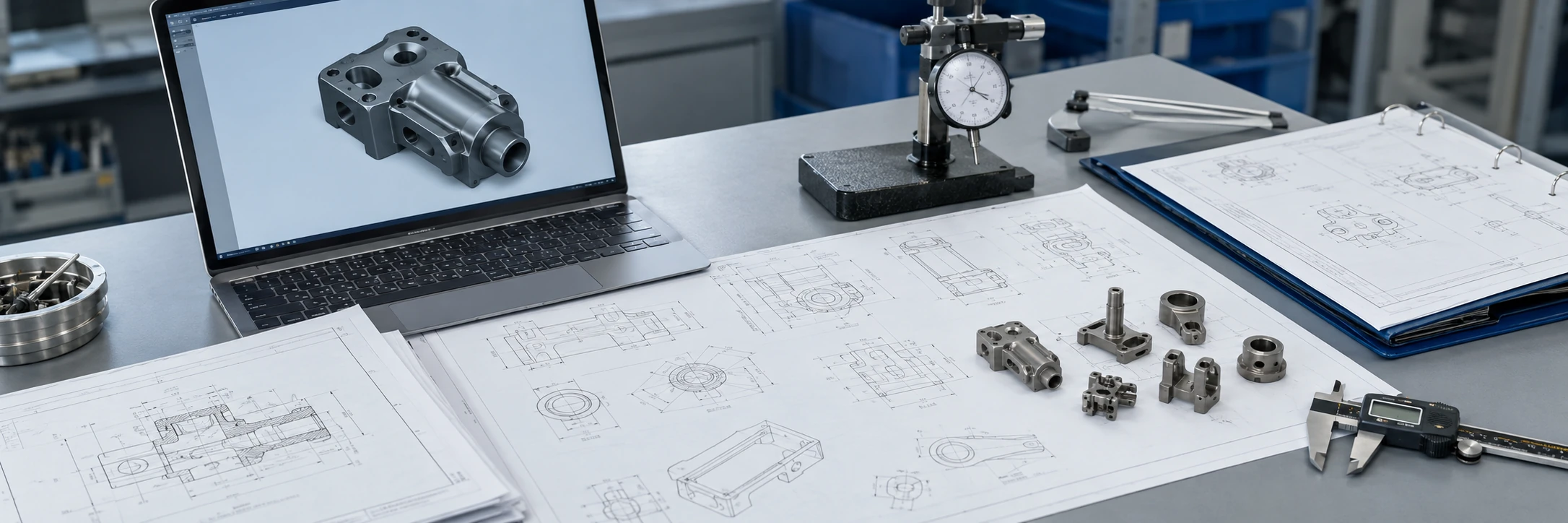
Core conclusion: Cost review should start from drawing-level and project-level inputs, not only a 3D model.
Why Drawing Data Matters in a MIM vs CNC Cost Review
A 3D model shows the shape of a part, but it does not always show manufacturing priority. For example, a CAD model may show a hole, a flat surface, or a thin wall, but it may not tell the supplier which feature controls assembly, which face must seal, which datum is used for inspection, or which dimensions can remain as-sintered after MIM.
From a MIM vs CNC cost review perspective, this difference matters because CNC machining and MIM respond to different cost drivers. CNC cost is usually sensitive to machining time, tool access, number of setups, tool changes, fixturing, and tolerance requirements. MIM cost is affected by tooling investment, feedstock and material selection, debinding and sintering route, shrinkage compensation, moldability, secondary machining, and inspection planning.
A basic MIM vs CNC machining comparison can be made from geometry. A meaningful cost review needs the drawing data that explains what the part must do in production.
```A 3D Model Shows Geometry, But Not Manufacturing Priority
The 3D model is still important. It helps the supplier review part size, wall thickness, undercuts, internal features, hole positions, and general moldability. It also helps identify whether the part shape is closer to a high-volume near-net-shape MIM candidate or a low-volume machined component.
However, the 3D model usually does not define all cost-sensitive requirements. It may not show which dimensions are critical, which surfaces are cosmetic, which faces require machining, or whether the part must meet a functional test after sintering and finishing. If those requirements are missing, the cost review can underestimate inspection cost, secondary machining, or tool correction risk.
CNC Cost and MIM Cost Respond to Different Input Data
A CNC supplier can often estimate machining effort by looking at stock size, tool access, machining time, tolerance zones, surface finish, and setup complexity. A MIM supplier must review a different path: whether the part can be molded, whether shrinkage can be controlled, whether the tolerance plan is realistic after sintering, whether any features require post-sintering machining, and whether the production volume supports tooling investment.
That is why a MIM vs CNC cost review should not ask only, “Can this part be made by MIM?” A better question is, “What drawing and project data are needed to compare the real manufacturing route?”
Practical review rule: A geometry-only review can identify possible process fit, but a drawing-data review can identify cost drivers, tolerance risk, secondary operation requirements, and quote readiness.
Core Files to Send Before Comparing MIM and CNC Cost
For an initial MIM vs CNC cost review, the minimum input package should include a 3D CAD file, a 2D drawing, material information, expected production volume, and any known finishing or inspection requirements. More complete input helps the supplier separate preliminary process opinion from a production-oriented cost review.
```3D CAD file
Supports geometry review, wall thickness checks, tooling direction, moldability, and possible shrinkage-sensitive areas.
2D drawing
Defines tolerances, datums, threads, surface requirements, material notes, and inspection expectations.
Project data
Clarifies annual volume, production stage, material flexibility, target cost, and current CNC pain points.

Core conclusion: A cost review becomes more reliable when geometry, tolerance, material, volume, and inspection data are reviewed together.
3D CAD File for Geometry and Tooling Review
The 3D CAD file allows the engineering team to review geometry, parting direction, potential gate location, wall thickness, undercuts, thin sections, and areas that may be sensitive to sintering deformation. A neutral CAD format such as STEP is commonly useful for technical review because it preserves geometry more reliably than a drawing screenshot or PDF alone.
For MIM review, the CAD file also helps identify whether the part has near-net-shape value. Small complex geometry, repeated features, internal details, or difficult CNC access can make MIM worth reviewing. Large simple blocks, very low volume parts, or parts with many tight machined surfaces may remain better suited to CNC.
2D Drawing for Tolerances, Datums, and Inspection
The 2D drawing is often more important than users expect. It defines tolerance requirements, datum references, thread callouts, surface roughness, coating notes, heat treatment requirements, inspection points, and functional surfaces. These details affect whether the MIM route can deliver the part as-sintered, whether sizing is needed, or whether selected features require machining after sintering.
If only the 3D model is available, the supplier may give a preliminary process opinion. If the 2D drawing is also available, the supplier can review the manufacturing requirements behind the shape.
Existing CNC Drawing or Current Machining Route, If Available
If the part is already produced by CNC, the current CNC drawing or machining route can help the review. It may show which operations are expensive, which features are difficult to machine, which surfaces are critical, and where scrap or inspection issues occur.
This does not mean MIM must copy the current CNC route. In many cases, the goal is to identify which features can be molded near-net-shape and which features still require secondary operations. The existing CNC route simply gives the MIM review team more context.
Minimum useful package: If you cannot prepare all project data yet, send at least the 3D CAD file, 2D drawing, current material, expected annual volume range, and any known critical dimensions or functional surfaces for the MIM vs CNC cost review.
Drawing Details That Change the Cost Review Result
Not every drawing detail has the same cost impact. In a MIM vs CNC cost review, the most important drawing details are the ones that affect tooling, shrinkage, inspection, and secondary operations.
```
Core conclusion: MIM vs CNC cost review depends on which features are critical, not only on the part shape.
Critical Dimensions and Tight Tolerance Zones
Critical dimensions should be clearly marked. A general tolerance block is helpful, but it is not enough if some dimensions are much more important than others. If every dimension is treated as equally critical, the MIM cost review may become too conservative. If truly critical dimensions are not identified, the review may miss the need for machining, sizing, fixture inspection, or tool adjustment.
A strong drawing package separates functional dimensions from non-critical dimensions. This helps the supplier judge where MIM can use near-net-shape capability and where additional control is required.
Datum References and Inspection Surfaces
Datum references affect how the part will be checked and how dimensional variation will be interpreted. For CNC parts, datums may be linked to machining setups and fixture control. For MIM parts, datums can influence how the supplier evaluates sintering distortion, inspection fixtures, and whether certain surfaces need post-sintering machining.
If datum references are missing or unclear, the supplier may not know which surface controls assembly. This can make the cost review less reliable, especially for parts with sealing, sliding, rotating, or alignment functions.
Threads, Holes, Sealing Faces, and Sliding Surfaces
Threads, small holes, sealing faces, bearing surfaces, and sliding features should be called out clearly. Some features may be moldable, while others may need machining after sintering. This decision affects cost.
For example, a part may appear suitable for MIM because the overall geometry is complex and repeated in high volume. But if multiple holes require tight positional tolerance or a sealing face requires a controlled surface finish, the final route may include MIM plus secondary machining. That combined route may still be valuable, but it must be reviewed honestly.
Cosmetic Surfaces and Visible Appearance Zones
Cosmetic surfaces should also be identified when appearance matters. MIM parts can support many finishing routes, but visible surfaces, coating zones, masking areas, and texture expectations should be clarified early. If the drawing does not show appearance-critical zones, the review may underestimate finishing, inspection, or handling requirements.
Engineering review note: If the part is close to tooling review, it may also be useful to compare this drawing package with the preparation logic in MIM design review before tooling.
Project Data Needed Beyond the Drawing
The drawing explains what the part must be. Project data explains whether MIM or CNC makes sense for the program. This is especially important when the part is being considered for a CNC-to-MIM transition, because tooling cost, production stability, material route, and secondary operation planning must be reviewed together.
```Annual Volume and Expected Production Life
Annual volume is one of the most important inputs in a MIM vs CNC cost review. MIM requires tooling investment, so the cost logic depends heavily on whether the production volume can support that tooling. For a deeper discussion of how volume affects tooling economics, review MIM tooling amortization by annual volume. CNC can be more practical for low-volume or changing designs because it avoids dedicated MIM tooling.
The supplier does not need a perfect forecast at the first review stage. A realistic range is still helpful. For example, the review may differ if the part is needed in hundreds per year, thousands per year, or tens of thousands per year.
Prototype, Pilot Run, or Production Stage
The project stage also matters. If the part is still changing, CNC may remain useful for prototypes, pilot builds, or design validation. MIM becomes more relevant when the design is stable enough for tooling review and the production volume can justify the development path.
For early-stage projects, the best next step may be engineering review rather than quote comparison. For stable production projects, a cost review can focus more directly on tooling, unit cost, secondary operations, and inspection requirements.
Material Grade and Acceptable Alternatives
Material information is another cost-sensitive input. The drawing should include the current material grade, required mechanical or functional properties, and whether equivalent MIM material options can be considered. If the exact material is mandatory, the supplier must review whether a prepared feedstock is available and whether the sintering route is suitable. If alternatives are allowed, the cost review may have more flexibility.
Material should not be treated as a simple name match. A CNC material callout may not always translate directly into an available MIM feedstock and final part condition. The review should confirm material grade, final requirements, and any heat treatment or surface treatment expectations.
Target Cost, If Already Defined Internally
If the buyer or engineering team already has a target cost, it can be useful to share it as a review reference. The supplier may not be able to meet the target, but the information helps clarify whether the goal is cost reduction, supply stability, part consolidation, reduced machining time, or high-volume production.
A target cost should not replace technical requirements. It is useful only when combined with drawing, material, volume, and quality data.
Secondary Operations and Finish Requirements to Confirm Early
A common mistake in MIM vs CNC cost review is assuming that MIM eliminates all secondary operations. MIM can produce small complex metal parts near net shape, but some features may still require machining, sizing, heat treatment, coating, polishing, or inspection after sintering.
```
Core conclusion: A realistic MIM cost review must include final functional requirements, not only molded geometry.
Features That May Still Need Machining After MIM
Threads, precision holes, sealing surfaces, tight datum surfaces, bearing seats, sharp functional edges, and highly controlled flatness zones may require post-sintering machining. This does not automatically make MIM unsuitable. It simply means the cost review should consider a combined route.
For many suitable parts, MIM forms the complex geometry while secondary machining is limited to a few functional features. That can still reduce machining time compared with producing the entire part from bar stock or billet.
Heat Treatment, Coating, and Surface Finish Requirements
Heat treatment, coating, surface finish, passivation, polishing, or other finishing requirements should be listed before the cost review. These requirements can influence material selection, process route, inspection, packaging, and supplier responsibility.
If coating or surface finishing is required, the drawing should define the functional purpose and controlled surfaces. Requirements such as wear resistance, corrosion resistance, appearance, or contact performance should be separated from general appearance preferences.
Inspection and Functional Testing Expectations
Inspection requirements affect cost because they define how the part will be accepted. Critical dimensions, functional gauges, hardness, material verification, surface condition, or assembly-related checks should be identified early.
If the part has mating surfaces, sliding contact, sealing function, or alignment requirements, the supplier should know before quoting. Otherwise, the cost review may ignore inspection fixtures, secondary machining, or quality control time.
Cost Review Readiness Levels
Not every submission package supports the same level of MIM vs CNC cost review. The following table helps sourcing and engineering teams understand whether the result will be a rough process opinion, a preliminary cost direction, or a more production-oriented review.
```| Submission Package | What XTMIM Can Usually Review | Main Limitation | Recommended Next Step |
|---|---|---|---|
| 3D CAD only | Geometry, size, general moldability, and possible process fit. | Tolerances, datums, finish, inspection, material route, and volume are unclear. | Request preliminary engineering review, then add drawing and project data. |
| 3D CAD + 2D drawing | Geometry, tolerance zones, functional features, and possible secondary operation needs. | Tooling economics and production route remain unclear without volume and project stage. | Add annual volume, material requirement, and production stage. |
| CAD + drawing + volume + material | MIM vs CNC route direction, tooling relevance, material review, and major cost drivers. | Finish, heat treatment, coating, and inspection may still change final cost. | Add secondary operation, finish, and inspection requirements. |
| Complete production review package | More practical review of MIM tooling, sintering control, secondary machining, finishing, inspection, and quote readiness. | Final quotation may still require supplier review of manufacturability, samples, and commercial details. | Proceed to drawing review or quote request with a complete input package. |
Engineering takeaway: The goal is not to make the drawing package complicated. The goal is to make the cost review specific enough to separate CNC machining effort from MIM tooling, sintering, secondary operation, and inspection requirements.
What Happens When Cost Review Data Is Missing
When drawing data is incomplete, the supplier may still provide a preliminary MIM vs CNC cost review. However, the result should not be treated as a final process recommendation or reliable cost comparison.
```Missing Tolerance Data Can Understate Inspection and Machining Cost
If the drawing does not identify tight tolerances or critical dimensions, the review may assume that most features can be accepted as-sintered. Later, when the true tolerance requirements appear, the project may require secondary machining, sizing, tool correction, or additional inspection.
This can change the expected cost difference between MIM and CNC.
Missing Volume Data Can Make MIM Look Unrealistic or Falsely Attractive
If annual volume is missing, MIM may look too expensive because tooling cost is considered without production context. It may also look falsely attractive if unit cost is discussed without acknowledging tooling investment and design stability.
A realistic volume range helps the supplier judge whether the part should be reviewed as a MIM production candidate, a CNC part, or a project that needs further design stabilization.
Missing Finish Data Can Hide Secondary Operation Cost
If surface finish, heat treatment, coating, or cosmetic requirements are not included, the cost review may focus only on forming or machining. Final part cost may later increase when finishing and inspection requirements are added.
This is especially important when the part has visible surfaces, sliding contact, sealing function, corrosion exposure, or coating requirements.
Composite field scenario for engineering training
A small CNC-machined metal component is being reviewed for possible MIM conversion. The 3D model shows complex geometry, but the 2D drawing marks two tight datum-related dimensions, one sealing face, several threaded holes, and a heat treatment requirement.
If only the 3D model is reviewed, the part may look like a strong MIM candidate. After the full drawing is reviewed, the cost picture becomes more specific: MIM may still form the main geometry, but secondary machining, heat treatment, and inspection must be included. The review becomes more useful because it reflects the actual part requirements instead of only the visible shape.
MIM vs CNC Cost Review Input Checklist
Before asking for a MIM vs CNC cost review, prepare the following information. If the project is still at the early preparation stage, the broader MIM RFQ preparation guide can help organize your submission package.
```
Core conclusion: The better the input package, the more practical the MIM vs CNC cost review becomes.
Minimum Input Package
| Input | Why It Matters |
|---|---|
| 3D CAD file | Allows geometry, moldability, and machining access review. |
| 2D drawing | Defines tolerances, datums, material, finish, and inspection requirements. |
| Current material | Defines tolerances, datums, material, finish, and inspection requirements.|
| Current material | Helps review MIM feedstock availability and final part requirements. |
| Annual volume estimate | Helps judge whether MIM tooling economics are reasonable. |
| Current production method | Helps compare CNC pain points with possible MIM advantages. |
Recommended Input Package for Production Review
| Input | Why It Matters |
|---|---|
| Critical dimension list | Helps separate functional features from general dimensions. |
| Surface finish requirement | Identifies finishing or machining needs. |
| Heat treatment or coating notes | Affects route planning and final cost. |
| Inspection plan or key quality requirements | Helps estimate inspection and quality control effort. |
| Expected production life | Helps review tooling investment over the program. |
| Known CNC cost or machining pain points | Helps focus the review on real improvement opportunities. |
Optional but Helpful Supporting Information
If available, also provide sample photos, current CNC process concerns, assembly function, target cost range, or known tolerance problems. These inputs are not always required for the first review, but they help the supplier understand why the project is being considered for MIM.
Related preparation note: If your team needs a broader submission checklist, review what to send for a MIM RFQ before requesting a detailed cost comparison.
Drawing Data Impact Table
The same input can affect MIM and CNC cost in different ways. This table helps clarify why a supplier needs both drawing data and project data before comparing the two routes.
```| Input Data | Why It Matters for MIM | Why It Matters for CNC | Cost Review Risk If Missing |
|---|---|---|---|
| 3D CAD | Supports tooling, shrinkage, and geometry review. | Supports machining access and setup review. | Only a rough process opinion may be possible. |
| 2D drawing | Defines tolerance, datum, material, finish, and inspection needs. | Defines machining tolerance and inspection planning. | Hidden machining or inspection cost may be missed. |
| Annual volume | Helps judge tooling cost justification. | Helps judge setup and cycle-time economics. | Process recommendation may be misleading. |
| Material requirement | Supports feedstock and sintering route review. | Supports stock and machining behavior review. | Wrong material cost assumption may be used. |
| Surface / heat treatment | Supports secondary operation planning. | Supports finishing and outsourcing review. | Final part cost may be understated. |
| Inspection requirement | Supports quality planning and fixture needs. | Supports inspection time and acceptance planning. | Quality cost may be underestimated. |
Missing Data Risk Table
| Missing Input | Typical Review Limitation | Recommended Action |
|---|---|---|
| No 2D drawing | Critical tolerances and datums are unclear. | Add a toleranced drawing or identify key functional dimensions. |
| No annual volume | Tooling economics cannot be judged. | Provide annual volume and expected production life. |
| No material requirement | Material route and final property needs are unclear. | Provide current material and acceptable alternatives. |
| No finish requirement | Secondary operation cost may be hidden. | Define surface finish, heat treatment, coating, or appearance zones. |
| No inspection requirement | Quality cost may be underestimated. | Identify critical inspection features and functional tests. |
| No project stage | Review cannot distinguish prototype from production route. | Clarify prototype, pilot, or production status. |
How the Input Package Changes the Review Result
A complete input package does not only make communication easier. It changes what the engineering team can responsibly conclude. With limited data, the review may only state that MIM is technically worth considering. With complete drawing and project data, the review can address tooling feasibility, tolerance strategy, post-sintering machining, material route, inspection effort, and whether the project is ready for quoting.
| Review Question | Weak Input Package | Stronger Input Package |
|---|---|---|
| Is the part a possible MIM candidate? | Can be judged roughly from geometry. | Can be checked against geometry, tolerance priority, and functional surfaces. |
| Can MIM reduce CNC machining effort? | Only general assumptions are possible. | Machined surfaces, threads, datum features, and sealing faces can be identified. |
| Is tooling cost worth reviewing? | Unclear without volume and design stability. | Annual volume and production life support a more practical tooling discussion. |
| Can the route be quoted? | Quote may remain preliminary or require many assumptions. | Supplier can review a clearer route covering tooling, MIM process, secondary operations, and inspection. |
When to Request a Cost Review or Engineering Review First
The next step depends on how complete your drawing package is.
If you already have a 3D CAD file, 2D drawing, material requirement, annual volume, critical dimensions, and finishing requirements, you can request a MIM vs CNC cost review. The supplier can evaluate tooling, sintering, secondary operations, inspection, and production cost assumptions more directly.
If the part is still changing or the drawing does not clearly define critical dimensions, it is better to request an engineering review first. This helps identify which requirements must be clarified before comparing MIM and CNC cost.
If your team is still preparing internal data, use an RFQ preparation checklist before requesting a formal quote. A better input package usually leads to a more useful review.
```Decision path: Use engineering review when requirements are unclear, RFQ preparation when the input package is incomplete, and quote request when the drawing, material, volume, finish, and inspection requirements are ready.
FAQ: Drawing Data for MIM vs CNC Cost Review
Can XTMIM compare MIM and CNC cost with only a 3D model?
A 3D model can support a preliminary process review, but it is usually not enough for a reliable MIM vs CNC cost review. The 2D drawing, material requirement, annual volume, critical tolerances, surface finish, secondary operations, and inspection expectations are needed to judge real manufacturing cost.
Is a 2D drawing still needed if the CAD model is complete?
Yes. The CAD model shows geometry, but the 2D drawing defines manufacturing and inspection requirements. Tolerances, datum references, threads, surface finish, heat treatment, and critical dimensions can all affect whether MIM, CNC, or a combined route is more practical.
Why does annual volume matter in a MIM vs CNC cost review?
Annual volume matters because MIM requires tooling investment. A part may not justify MIM tooling at low volume, but it may become a stronger candidate when the design is stable and production volume is high enough. CNC may remain better for low-volume or changing designs.
Should secondary machining be listed before the cost review?
Yes. Threads, sealing faces, datum surfaces, precision holes, and tight tolerance zones may require machining after sintering. Listing these requirements early helps the supplier review the real MIM route instead of assuming every feature is finished directly from molding and sintering.
Do I need to provide the current CNC cost?
Current CNC cost is helpful but not always required for the first review. If available, it helps clarify whether the goal is lower unit cost, reduced machining time, supply stability, part consolidation, or high-volume production. Technical requirements should still be provided with the cost target.
What should I do if my drawing package is incomplete?
If your drawing package is incomplete, start with engineering review or RFQ preparation instead of asking for a final cost comparison. Identify the missing tolerances, material requirements, annual volume, finish expectations, and inspection needs before requesting a more detailed quote.
Prepare the Right Input Package Before Comparing MIM and CNC Cost
If you are comparing CNC machining with metal injection molding, prepare the 3D CAD file, 2D drawing, material requirement, annual volume, critical dimensions, surface finish, heat treatment, and inspection requirements before requesting a cost review.
For early-stage projects, XTMIM can review the drawing package first and identify what information is still needed. For stable production projects, a complete input package can support a more practical MIM vs CNC cost review.