CNC to MIM Engineering Review A CNC-machined part is ready for MIM tooling review only when the project team can separate what was made for CNC machining from what must be controlled in final MIM production. A physical CNC sample is useful, but it is not enough by itself. Before tooling discussion, a MIM engineering …
CNC to MIM Engineering Review
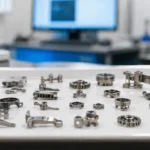
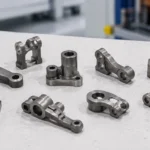
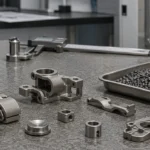
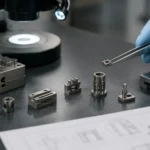
A CNC-machined part is ready for MIM tooling review only when the project team can separate what was made for CNC machining from what must be controlled in final MIM production. A physical CNC sample is useful, but it is not enough by itself. Before tooling discussion, a MIM engineering team needs a 2D drawing, 3D model, critical dimensions, functional surfaces, target material, annual volume, surface or heat treatment requirements, and any features that may still need secondary machining after sintering.
This matters because MIM tooling must account for shrinkage, gate position, parting line, ejection, sintering support, secondary operations, and final inspection requirements. The goal is not to replace CNC blindly. The goal is to decide whether the part is ready for a practical CNC-to-MIM review, needs DFM adjustment, should remain CNC, or may require a hybrid MIM plus machining route.
```Quick Answer: When Is a CNC Part Ready for MIM Tooling Review?
- Ready when geometry, critical dimensions, annual volume, material, and functional surfaces are clear.
- Not ready if the team only provides a CNC sample without drawings, tolerances, functional surfaces, or production volume.
- Needs DFM review if thin walls, threads, datum surfaces, deep holes, or sealing faces may change the MIM tooling or secondary operation route.
- May stay CNC if volume is low, geometry is still changing, or the part depends on many tight machined features with no redesign room.
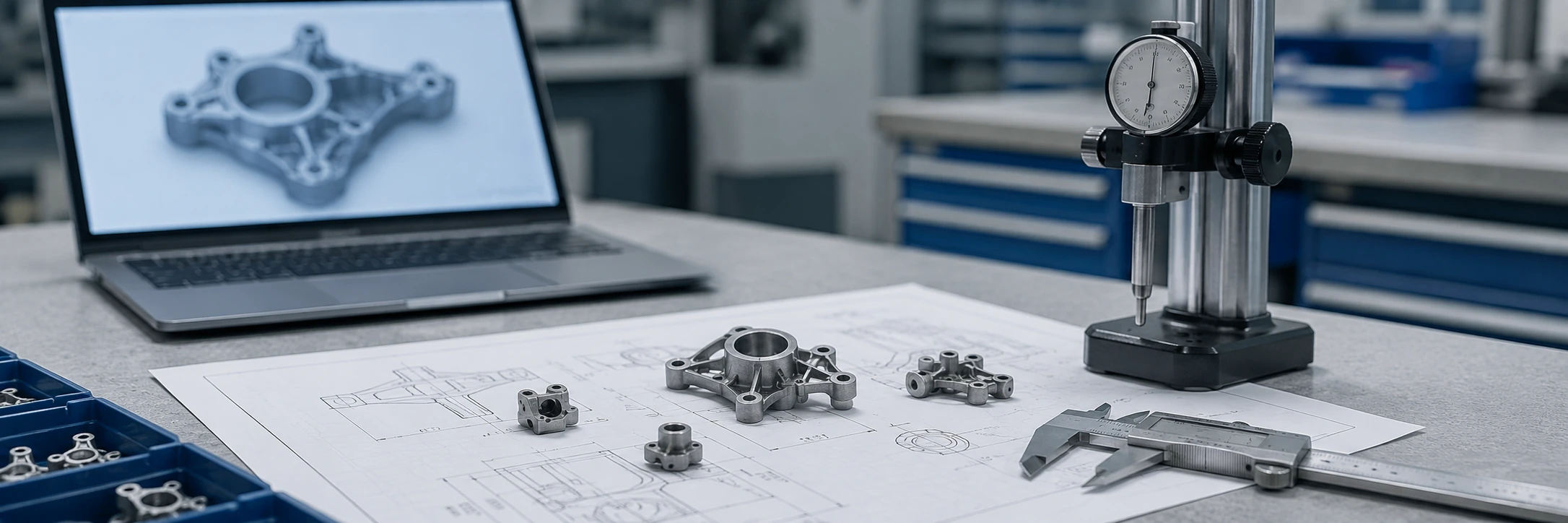
Core conclusion: A CNC sample alone is not enough for MIM tooling review; the drawing package and functional requirements must be clear.
What Does “Ready for MIM Tooling Review” Mean for a CNC-Machined Part?
For a CNC-machined part, “ready for MIM tooling review” means the part has enough engineering information for a MIM supplier to evaluate tooling feasibility, shrinkage control, dimensional risk, and secondary operation needs. It does not simply mean that the part has already been produced successfully by CNC machining.
CNC machining removes material from bar stock, plate, casting, or other metal stock. Metal injection molding forms prepared feedstock in a mold, removes binder, and sinters the part to its final metal condition. Because these processes create geometry in different ways, a CNC geometry cannot always be copied directly into a MIM tool.
```Readiness Is Not the Same as Having a CNC Prototype
A CNC prototype can prove assembly fit, function, or early customer validation. However, it may also contain machining choices that are not required in the final product. Sharp internal corners, deep drilled holes, narrow slots, threaded features, tight datum relationships, or cosmetic surfaces may exist because CNC can produce them with specific tools and setups.
Before MIM tooling review, the team should determine whether each feature is functional, CNC-driven, moldable with review, suitable for secondary machining, or likely to make MIM unsuitable without design changes.
What MIM Engineers Need Before Tooling Discussion
A MIM engineer needs more than a sample part or a STEP file. The review should include the drawing intent behind the part. Important inputs include the 2D drawing, 3D CAD model, critical-to-function dimensions, material requirement, expected annual volume, surface finish requirements, heat treatment expectations, inspection requirements, and known pain points from CNC production.
For a broader parent comparison, review the MIM vs CNC machining comparison. This article focuses only on the readiness review before MIM tooling discussion.
Four Practical Readiness Levels Before Tooling Review
A CNC part does not need a simple yes-or-no answer. A more useful review classifies the project into one of four readiness levels so the engineering, sourcing, and project teams know the next action.
Ready for MIM Review
The drawing, CAD model, critical dimensions, material target, annual volume, and functional surfaces are clear enough for tooling feasibility discussion.
Needs DFM Review
The part may be suitable, but thin walls, threads, holes, datum features, or tolerance notes need design-for-MIM feedback first.
Hybrid Route Likely
The part body may be MIM-suitable, but selected sealing, fitting, threaded, or datum surfaces may still require post-sintering machining.
Stay CNC for Now
The design may still be changing, volume may be too low, or the part may depend too heavily on CNC-controlled geometry.
The CNC-to-MIM Readiness Checklist
The following checklist helps engineering and sourcing teams judge whether a CNC-machined part is ready for MIM tooling review. It is designed to reveal what is ready, what needs clarification, and what may affect tooling, sintering, secondary operations, or final inspection.
```| Review Area | What to Check | Why It Matters | Review Status |
|---|---|---|---|
| Geometry | Thin walls, deep slots, undercuts, internal corners, holes, ribs, bosses, and fragile features | MIM tooling, ejection, debinding, and sintering may require geometry adjustment | Ready / Needs DFM / Not clear |
| Critical dimensions | Functional dimensions, datum references, assembly fits, sealing areas, sliding surfaces, and tolerance stack-up | Not every CNC tolerance should automatically become a MIM tolerance target | Ready / Needs DFM / Not clear |
| Drawing completeness | 2D drawing, 3D CAD, material callout, tolerance notes, surface notes, and inspection points | Tooling review depends on design intent, not only part shape | Ready / Needs input / Not clear |
| Material requirement | Current CNC material, required properties, corrosion needs, magnetic behavior, heat treatment, or regulatory needs | MIM material availability and sintering response must be reviewed before tooling | Ready / Needs material review / Not clear |
| Annual volume | Prototype volume, launch volume, annual production estimate, and expected project life | MIM tooling becomes more reasonable when production volume can absorb tooling cost | Ready / Needs business review / Not clear |
| Secondary operations | Threads, sealing faces, tight bores, datum surfaces, polishing, coating, heat treatment, or machining after sintering | Some features may be best controlled after sintering rather than molded directly | Ready / Needs operation review / Not clear |
| Inspection plan | Key inspection features, functional gauges, CMM points, surface inspection, and assembly checks | Review should connect tooling decisions with final quality control | Ready / Needs inspection review / Not clear |
A part does not need to be perfect before review. However, the unclear items should be visible. A good MIM tooling review begins by identifying what is ready, what needs DFM discussion, and what may require a different manufacturing route.
If several checklist items are marked “Not clear,” the next step should be drawing clarification rather than tooling quotation. If most items are “Ready” but a few functional areas need tighter control, the project may be suitable for a MIM body with selected secondary operations.

Core conclusion: MIM tooling readiness depends on several engineering inputs, not only the existence of a CNC sample.
CNC Features That May Need Redesign Before MIM Tooling
A CNC-machined part often contains features that are easy to cut but difficult to mold, debind, sinter, or inspect consistently. These features do not automatically make MIM impossible. They simply need to be reviewed before tooling decisions are made.
```| CNC Feature | MIM Review Risk | Possible Action |
|---|---|---|
| Sharp internal corners | Mold filling, stress concentration, tooling wear, or sintering distortion risk | Add radius if function allows |
| Deep small holes | Difficult molding, weak core pins, or secondary machining requirement | Review whether the hole should be molded, drilled, or redesigned |
| Tight threads | Molded threads may not meet functional or inspection needs | Consider tapping after sintering |
| Thin isolated lugs | Green part damage, debinding damage, or distortion risk | Review wall thickness, support, and ejection direction |
| Flat sealing faces | Sintering movement may affect sealing performance | Consider machining, lapping, or inspection-controlled secondary operation |
| Tight datum surfaces | MIM shrinkage variation may affect datum relationships | Identify which datums require post-sintering control |
| Long narrow slots | Tooling strength, filling, and deformation risk | Review slot width, depth, and opening direction |
| Cosmetic CNC surfaces | MIM as-sintered surface may differ from machined finish | Define required surface appearance or finishing route |
Deep Holes, Internal Corners, and Undercuts
CNC machining can produce holes, pockets, grooves, and internal features using cutting tools. In MIM, these features must be formed by mold elements, supported during molding, and remain stable through debinding and sintering. A deep hole may require a slender core pin. A sharp corner may require a radius. An undercut may need a side action, design change, or secondary operation.
Thin Walls and Isolated Fragile Features
MIM is often suitable for small, complex metal parts, but thin or isolated features still need careful review. Fragile lugs, thin arms, tall ribs, and unsupported sections may be damaged during green part handling or may distort during sintering.
Threads, Sealing Faces, and Datum Surfaces
Threads, sealing faces, and datum surfaces are common decision points when moving from CNC machining to MIM. Some features may be molded near-net shape, while others may require post-sintering machining or sizing. For example, a non-critical hole may be molded, while a sealing bore may need machining after sintering.
During review, each feature should be assigned to one of three paths: mold directly, redesign for MIM, or control after sintering. This prevents the team from forcing every CNC feature into the mold when secondary machining or design adjustment would be more practical.
To understand how these issues fit into a broader review flow, see MIM design review before tooling.

Core conclusion: Not every CNC feature should be molded directly; functional and manufacturability risks must be reviewed first.
Composite Field Scenario for Engineering Training
A project team has a small stainless steel CNC-machined component used in a compact mechanical assembly. The part includes two mounting holes, a threaded feature, a flat sealing area, two thin side lugs, and a datum face used during assembly inspection.
From a MIM review perspective, the team should not simply ask whether the whole part can be molded. Instead, the review should separate the part into three groups: geometry that may be suitable for MIM near-net forming, functional surfaces that may require tighter inspection or secondary machining, and features that may need redesign before tooling.
This type of review helps the team avoid treating CNC geometry as final MIM geometry too early. It also helps sourcing and project teams ask for a review that connects design intent, tooling risk, secondary operations, and final inspection instead of asking only for a unit price comparison.
What Drawing Data Should Be Confirmed Before Review?
A CNC sample can show the current shape, but the drawing explains the engineering intent. Before MIM tooling review, the team should confirm whether the drawing and CAD data clearly describe the final production requirement.
```2D Drawing and 3D Model Consistency
The 3D model defines geometry, but the 2D drawing usually defines tolerances, datum structure, critical dimensions, surface notes, material requirements, heat treatment, and inspection expectations. If the CAD model and drawing do not match, the MIM supplier may not know which source controls the review.
Critical-to-Function Dimensions
Not every dimension on a CNC drawing should be treated as critical for MIM. Some tolerances may exist because they were easy to hold during machining, not because the assembly needs them. Before review, the team should identify dimensions that affect fit, function, motion, sealing, strength, or inspection.
Current CNC Pain Points and Production Target
A useful review should explain why the team is considering MIM. Common reasons include machining time, part complexity, tool changes, high scrap risk, multiple setups, assembly miniaturization, or rising annual volume.
| Input Detail | How It Changes the Review | Typical Decision Impact |
|---|---|---|
| Critical dimensions and datums | Shows which features must be controlled after shrinkage and sintering | May affect tooling compensation, sizing, machining, or inspection strategy |
| Functional surfaces | Identifies sealing, sliding, locating, bearing, or assembly-critical areas | May require post-sintering machining, polishing, or tighter inspection control |
| Annual volume | Shows whether tooling review is commercially meaningful | May support MIM review, delay tooling, or keep CNC for validation |
| Current CNC material | Provides the starting point for MIM material availability and performance review | May trigger material substitution or feedstock availability discussion |
| Surface and heat treatment notes | Clarifies final performance and appearance expectations | May add secondary operation review before quotation |

Core conclusion: The review package must explain design intent, not just part shape.
When Should the Part Stay CNC Instead of Moving to MIM?
Some CNC-machined parts should remain CNC. MIM is not the best route for every metal part, and a credible review should identify when CNC is still the better choice.
```| Situation | Preferred Path | Reason |
|---|---|---|
| Very low annual volume | Stay CNC or delay tooling review | Tooling cost may not be justified |
| Design changes are still frequent | Stay CNC for validation | MIM tooling should not begin before geometry stabilizes |
| Large, simple geometry | Stay CNC or consider another process | MIM is strongest for small, complex, high-volume parts |
| Extremely tight local tolerance with no redesign room | CNC or hybrid route | Some features may require machining even if the body is MIM |
| CNC sample has no drawing or functional notes | Engineering review first | The review lacks controlled design intent |
| Small complex part with stable geometry and rising volume | Review MIM | MIM may support near-net-shape production after tooling review |
| Mostly MIM-suitable body with a few precision surfaces | Hybrid MIM plus machining | MIM can form the body while CNC controls selected features |
Low-Volume or Frequently Changing Designs
If the part is still changing, CNC may remain the better validation route. MIM tooling requires design stability because tooling changes can affect cost, lead time, and project risk.
Extremely Tight Local Tolerance Without Redesign Room
A CNC drawing may include very tight tolerances across many features. If the design cannot allow tolerance adjustment, secondary operation, or inspection strategy, the part may not be ready for MIM tooling.
Large, Simple, or CNC-Efficient Geometry
MIM is most relevant for small, complex metal parts where tooling can support repeatable production. If the part is large, simple, and already efficient to machine, the tooling review may not show a strong reason to convert.
How XTMIM Reviews a CNC-Machined Part Before MIM Tooling
XTMIM reviews CNC-machined parts from a drawing and manufacturing feasibility perspective. The goal is to decide whether the part is ready for MIM tooling discussion, needs design adjustment, should remain CNC, or should use a hybrid process route.
```Initial Drawing and Geometry Screening
The first review focuses on geometry, size, wall thickness, hole structure, undercuts, functional surfaces, and parting or ejection concerns. The team also checks whether the drawing clearly identifies important dimensions and surfaces.
Tooling, Shrinkage, and Secondary Operation Review
If the part appears suitable, the next review considers tooling direction, shrinkage compensation, sintering stability, material choice, and secondary operation needs. For CNC-machined parts, the most important question is often which features should be molded and which features should remain controlled after sintering.
XTMIM can support injection molding, debinding, and sintering review based on internal process experience. Tool manufacturing is typically handled with external mold manufacturing support, while trial molding and tool correction review can be supported during project development.
Feedback Before Quotation or Tooling Decision
A useful review should produce practical feedback: whether the part appears suitable for MIM review, needs geometry adjustment, should keep selected features as secondary machined surfaces, requires material clarification, or may still be more practical as CNC.
The review should also identify what cannot be decided yet. Missing annual volume, unclear critical dimensions, uncertain material requirements, or unconfirmed surface expectations may delay a reliable quotation. These gaps are not failures; they are the items that should be clarified before tooling commitment.
For a structured support path, review XTMIM’s engineering review for MIM projects, MIM tooling review, and CNC to MIM conversion review.
What to Send for a CNC-to-MIM Tooling Review
A complete review package helps the engineering team respond more accurately. The minimum input package should include the information below.
```Minimum Input Package
- 3D CAD model.
- 2D drawing with tolerances and datum references.
- Current CNC material.
- Target material or required mechanical, corrosion, magnetic, or wear performance.
- Annual volume estimate.
- Current part size and weight if available.
- Critical-to-function dimensions.
- Functional surfaces such as sealing, sliding, bearing, locating, or assembly faces.
Optional but Useful Review Details
- Surface finishing or coating requirements.
- Heat treatment expectations if required.
- Inspection requirements or known quality concerns.
- Sample photos or current CNC process notes.
- Assembly context and mating part information.
- Current CNC pain points, such as machining time, scrap, fixture complexity, or cost pressure.
If the drawing has tight tolerances, thin features, deep holes, threaded areas, sealing surfaces, or unclear material requirements, the project should go through DFM feedback before a formal tooling decision. This reduces the risk of quoting a design that still needs major review.
Teams preparing a formal inquiry can also use the MIM RFQ preparation guide before submitting project data.
Before submitting the package, mark the features that must be controlled for function. This helps the review team separate dimensions that can follow normal MIM process capability from dimensions that may require tooling compensation, sizing, machining, or dedicated inspection.

Core conclusion: A structured drawing package improves the accuracy of CNC-to-MIM feasibility review.
Final Readiness Check Before You Submit
Your CNC-machined part is stronger for MIM review when the submitted package answers the engineering questions below.
Engineering Data
- The 2D drawing and 3D CAD model match.
- Critical-to-function dimensions are identified.
- Functional surfaces are marked or explained.
- Material and surface requirements are stated clearly.
Project Context
- Annual volume and project stage are known.
- Current CNC pain points are explained.
- Possible secondary operations are acceptable for review.
- The team is open to DFM feedback before tooling.
Submit Your CNC Drawing Package for MIM Review
If you have a CNC-machined sample, 2D drawing, or 3D model and want to evaluate whether it is ready for MIM tooling review, send the drawing package for engineering review. XTMIM can help identify geometry risks, critical dimensions, material questions, and possible secondary operation requirements before tooling discussion.
FAQ
Can a CNC-machined prototype be used directly for MIM tooling review?
A CNC prototype can be used as a reference, but it should not be the only review input. MIM tooling review also needs a 2D drawing, 3D model, critical dimensions, material requirements, annual volume, and functional surface information.
What information is needed before reviewing a CNC part for MIM?
The most useful information includes CAD data, 2D drawings, tolerances, datum structure, current material, target production volume, surface requirements, heat treatment needs, inspection requirements, and current CNC production pain points.
Which CNC features may still need machining after MIM?
Threads, sealing faces, tight bores, datum surfaces, and high-precision fitting features may still need machining, sizing, or inspection-controlled secondary operations after sintering.
Should tight CNC tolerances be kept on a MIM drawing?
Not automatically. The project team should identify which tolerances are critical to function. Some CNC tolerances may be relaxed, redesigned, or controlled through secondary operations in a MIM production route.
When should a part remain CNC instead of moving to MIM?
A part may remain CNC if volume is low, design changes are frequent, geometry is large and simple, or critical tolerances leave no room for MIM process review or secondary operation planning.
Can XTMIM review my CNC drawing before quoting MIM tooling?
Yes. A drawing-based review can help determine whether the part is suitable for MIM tooling discussion, needs DFM adjustment, should remain CNC, or may require a hybrid MIM plus machining route.