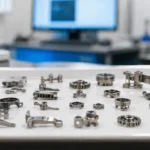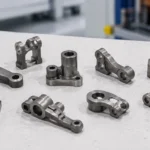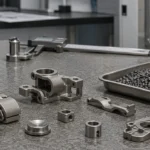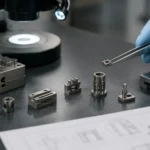
A visually acceptable MIM green part can still reveal hidden density, debinding, support, or shrinkage risks after sintering. A MIM green part can look acceptable and still fail after sintering because visual appearance does not confirm internal density uniformity, binder removal behavior, shrinkage response, support stability, or hidden handling damage. In practice, sintering does not …
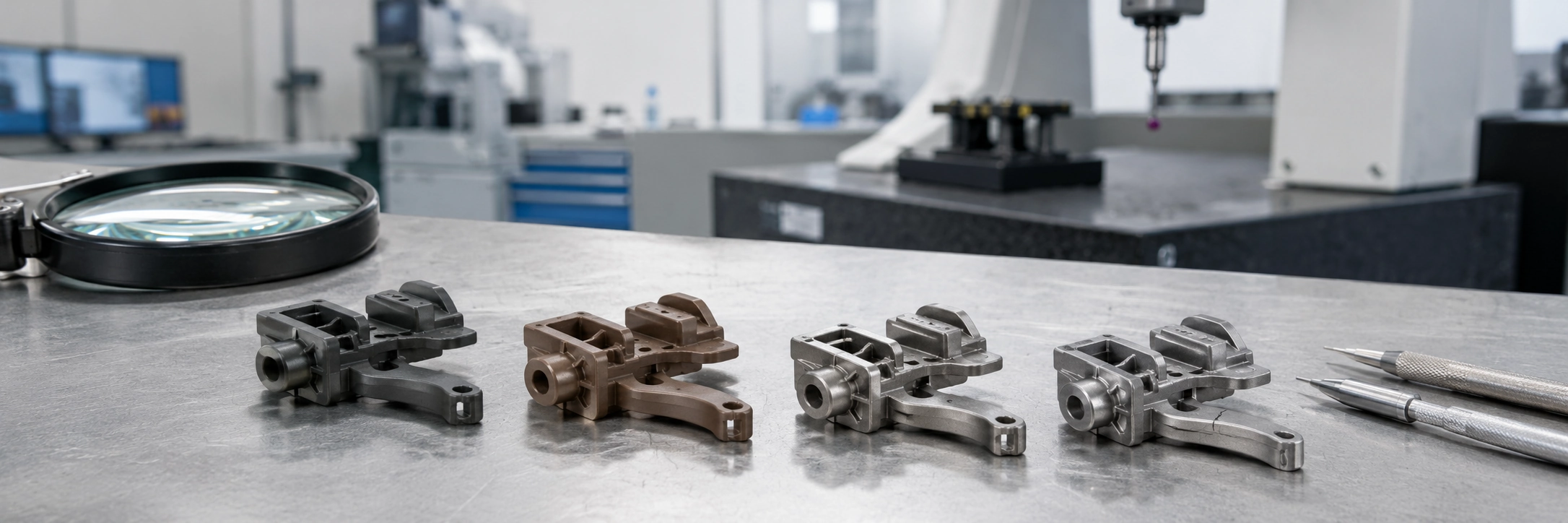
A MIM green part can look acceptable and still fail after sintering because visual appearance does not confirm internal density uniformity, binder removal behavior, shrinkage response, support stability, or hidden handling damage. In practice, sintering does not always create the defect from nothing. It often reveals risks that were already introduced during injection molding, green part handling, debinding, tooling compensation, or furnace loading. This matters for supplier quality engineers and project managers because a cracked, warped, blistered, or dimensionally unstable sintered part cannot be understood by looking only at the final furnace step. The real question is where the failure mechanism started. If your project depends on tight dimensions, flatness, functional surfaces, thin walls, or repeatable production volume, the green part must be reviewed as part of a full MIM process route and the broader metal injection molding project evaluation, not only as a molded shape that looks correct.
Quick Engineering Summary
A “good” green part should usually be understood as a visually acceptable molded part, not as proof that the final sintered part will meet dimensional, density, flatness, or surface requirements.
What the green part can show
Mold filling, visible breakage, obvious cracks, severe flash, gate condition, and early handling risk.
What it cannot prove
Uniform density, complete binder removal, stable shrinkage, support suitability, and final CTQ dimensional control.
What engineers should review
Geometry, wall transitions, debinding path, setter contact, furnace loading, material grade, tolerance strategy, and inspection plan.
This page is for early root-cause screening and supplier discussion. It does not replace project-specific DFM review, formal failure analysis, or customer-specific acceptance criteria. Before changing only the furnace cycle, engineers should review geometry, molding stability, green handling, debinding path, support condition, material requirement, and inspection data together.
Why Green Part Appearance Does Not Guarantee Sintered Part Quality
A green part is only an intermediate condition in metal injection molding. It has the intended molded shape, but it is still supported by a mixture of fine metal powder and binder. From a visual inspection perspective, the part may appear complete: no obvious short shot, no broken feature, no severe flash, and no visible crack. That does not mean the part is ready to become a stable sintered component.
A common mistake is to treat green part appearance as proof of process stability. It is not. Green inspection can confirm that the mold has filled and the part can be handled, but it cannot fully confirm internal powder-binder distribution, local density variation, hidden stress from ejection, or whether thick and thin sections will shrink evenly during sintering.
What visual green part inspection can confirm
Visual inspection of a green part can help identify obvious molding and handling problems. These include incomplete filling, gross deformation, large cracks, severe gate damage, broken ribs, visible flash, or handling marks. For simple geometry, this may be enough to decide whether a molded sample can move to debinding.
However, this is still a surface-level review. It does not prove that the part will maintain flatness, dimensional stability, strength, density, or cosmetic quality after debinding and sintering.
What green part inspection cannot confirm
Green inspection cannot fully confirm:
- whether density is uniform across thick and thin sections;
- whether binder removal paths are sufficient;
- whether a long unsupported span will sag during sintering;
- whether a sharp transition will concentrate shrinkage stress;
- whether a micro-crack has started during ejection or tray handling;
- whether tooling compensation matches the material shrinkage behavior;
- whether the final critical dimension will remain stable after densification.
In production, these questions usually require process data, part geometry review, debinding behavior, sintering support review, and final inspection feedback. The upstream MIM injection molding stability can create a visually complete part while still leaving density or handling risks that only become visible later.
Why hidden variation becomes visible later
Sintering is the stage where shrinkage, densification, and high-temperature shape stability become visible. A small density difference in the green part may become dimensional drift. A small handling crack may open after binder removal. A thick section with poor debinding path may blister. A flat feature that looks stable at room temperature may warp when the part loses binder support and shrinks on a setter.
| Green part looks acceptable | But it may still hide | Possible result after sintering |
|---|---|---|
| No obvious crack | Micro-crack from ejection or handling | Open crack after debinding or sintering |
| Complete filling | Local density variation | Uneven shrinkage or dimensional drift |
| Smooth surface | Binder removal difficulty | Blistering, swelling, or internal voids |
| Stable room-temperature shape | Poor sintering support | Warpage, sagging, flatness failure |
| Reasonable green dimension | Incorrect shrinkage compensation | Final dimension outside tolerance |
Engineering takeaway
A visually good green part should be treated as a process milestone, not as final proof of sintered quality.
What Changes Between Green Part, Brown Part, and Sintered Part

Core conclusion: Each MIM process state can hide or reveal different failure risks. The green part shows molded shape, the brown part reflects debinding behavior, and the sintered part reveals shrinkage, densification, and final stability. In MIM, “green part” describes the molded feedstock state, not the part color.
The green part, brown part, and sintered part should not be judged as the same condition. They represent different risk states in the MIM process.
Green part: shape is formed, but strength is still limited
The green part is the molded part after feedstock injection. It has the shape of the cavity, but it still contains binder. Its strength is enough for careful handling, but it is not a final metal component. Any handling damage at this stage can later become a more visible defect.
From a project review perspective, the green part is useful for checking mold filling, gate effects, visible geometry, early dimensional trends, and fragile feature handling. It should not be used as final proof of sintered part quality.
Brown part: binder has been removed, but the structure is fragile
After debinding, much of the binder has been removed. The part becomes a brown part. This stage is critical because the part has less binder support but has not yet reached final sintered strength. If debinding is incomplete or uneven, residual binder, internal gas pressure, or weak areas may create cracking or blistering during later heating.
A brown part may also be more sensitive to vibration, tray movement, or contact stress. If the part is mishandled or poorly supported, the damage may not become obvious until final sintering. For deeper process background, review the MIM debinding process.
Sintered part: shrinkage, densification, and distortion risks become visible
During sintering, the part densifies and shrinks toward its final dimensions. This is where hidden variation becomes visible. The final result depends on geometry, material, powder-binder system, debinding completeness, furnace atmosphere, support method, loading direction, and tooling compensation.
A stable sintered component is not created by the furnace alone. It is the result of controlled molding, careful green handling, suitable debinding, correct support, appropriate sintering cycle, and realistic inspection planning. The full MIM sintering process should be reviewed as one part of this broader quality chain.

Common Sintered Failures and Their Likely Earlier Causes
When a MIM part fails after sintering, the visible defect should be mapped back to possible earlier causes. This does not mean the furnace is never responsible. Furnace cycle, atmosphere, loading density, and support condition can all contribute. But the furnace should not be blamed before geometry, molding, handling, and debinding are reviewed.

Core conclusion: Final inspection identifies the defect, but root-cause review must trace the full MIM process chain.
Warpage after sintering
Warpage often appears when shrinkage is not uniform or the part is not supported properly during high-temperature densification. Long unsupported spans, wide flat areas, thin arms, asymmetric mass distribution, and uneven wall thickness can increase this risk.
The review should include part orientation, setter contact, support surface location, green density variation, wall transitions, and critical flatness requirements. If the drawing has strict flatness but the part has poor support surfaces, the issue may need design or tooling review, not only furnace adjustment.
Cracking after sintering
Cracking after sintering may come from green handling damage, residual binder, sharp internal corners, sudden section changes, or thermal stress. The crack location matters. A crack near a thin root suggests stress concentration. A crack near a handling point suggests green or brown part damage. A crack in a thick section may suggest debinding or internal pressure risk.
The review should compare crack location with part geometry, ejection direction, tray contact, debinding path, and heating profile. A single visible crack can have several possible upstream causes.
Blistering or swelling
Blistering often suggests gas-related risk. In MIM, this may occur when binder removal is incomplete or gas escape is restricted. Thick sections, enclosed shapes, blind holes, and poor debinding paths can increase risk.
A common mistake is to treat blistering as a surface defect only. In reality, blistering may indicate internal pressure, residual binder, contamination, or furnace profile issues. If the same location repeats across samples, the part geometry and debinding path should be reviewed.
Dimensional drift
Dimensional drift after sintering can result from shrinkage variation, tooling compensation mismatch, unstable molding conditions, support effects, or measurement strategy problems. The green part may look correct because it has not yet completed densification.
The review should focus on critical-to-quality dimensions, datum strategy, material shrinkage behavior, tooling compensation, sintering support, and lot-to-lot measurement records. Final tolerance capability depends on material, geometry, furnace loading, secondary operations, and inspection method. Review MIM shrinkage compensation when dimensional drift repeats across trial samples.
High porosity or low density
High porosity or low density may indicate insufficient densification, material-process mismatch, furnace condition issues, contamination, or poor upstream process stability. It may not be visible from appearance alone.
The review should include material grade, sintering cycle, atmosphere, part section thickness, density test method, and acceptance requirement. Density should be evaluated against the project requirement and applicable material specification, not only by visual judgment. Acceptance should be based on drawing requirements, application load, surface function, and the agreed inspection method. XTMIM’s inspection and testing support can help define the right review path for project-specific requirements.
Surface discoloration or contamination
Surface discoloration may come from atmosphere control, contamination, setter contact, residual binder, or post-sintering handling. It can be cosmetic, functional, or material-related depending on the application.
For visible components, electrical parts, regulated device hardware, or corrosion-sensitive components, surface condition should be reviewed before production approval. The acceptance standard should be defined early, especially if secondary finishing is planned.
| Sintered failure | Likely earlier cause | Engineering review focus |
|---|---|---|
| Warpage | Support issue, uneven wall thickness, green density variation | Support direction, setter contact, wall transition |
| Cracking | Handling damage, residual binder, fast heating, sharp corners | Green handling, debinding profile, stress concentration |
| Blistering | Trapped gas, incomplete binder removal | Debinding completeness, section thickness, binder system |
| Dimensional drift | Shrinkage variation, tooling compensation issue | CTQ dimensions, shrinkage factor, lot data |
| High porosity | Insufficient densification, material/furnace mismatch | Sintering cycle, atmosphere, density test |
| Surface discoloration | Atmosphere control, contamination, setter contact | Gas quality, furnace cleanliness, contact area |
When the Root Cause Started Before Sintering
The real system cause of a sintered failure may start several stages before the final furnace cycle. In production troubleshooting, this distinction matters because the corrective action must match the origin of the problem.
If the defect is caused by molding variation, changing only the sintering profile may not stabilize the part. If the defect is caused by poor support design, rechecking the debinding cycle will not solve flatness failure. If the defect comes from a sharp design transition, repeated trial runs may only repeat the same failure.
Molding variation that becomes shrinkage variation
Injection molding conditions influence how feedstock fills, packs, cools, and releases from the cavity. A part can appear filled but still carry local variation. Gate position, flow length, thin features, wall transitions, and part orientation can all affect density distribution.
During sintering, this variation may become uneven shrinkage. The final part may show dimensional drift even though the green part looked acceptable. For related upstream quality issues, read how injection molding affects MIM part quality.
Green part handling damage
Green parts are not final metal parts. Thin ribs, micro features, small holes, snap-like features, and long arms can be damaged during ejection or transfer. The damage may remain hidden until the binder is removed and the part is heated.
Handling review should include ejection marks, tray design, stacking practice, operator contact points, and whether fragile features are supported during transfer.
Debinding problems that appear as sintering defects
Debinding is not only a material removal step. It prepares the part for controlled densification. If binder removal is uneven, the part may carry residual risk into sintering.
A crack or blister after sintering may therefore have a debinding origin. For thick sections, enclosed geometry, or parts with limited venting paths, debinding review should be part of the failure investigation. The related article on furnace-stage quality factors in MIM explains this process-stage relationship in more detail.
Tooling or geometry decisions that limit final stability
Tooling compensation and part geometry are closely linked. The mold must account for shrinkage, but shrinkage is not always identical in every direction or section. If a part has uneven mass distribution, long unsupported features, or unrealistic tolerance requirements, final stability may be limited by the design itself.
This is why DFM review before tooling is more effective than repeated correction after sintering failures.
Furnace loading cannot fully correct an upstream design issue
Furnace loading, setter contact, atmosphere, and thermal profile matter. But they cannot fully correct every upstream issue. A part with poor support surfaces, excessive thickness transition, hidden cracks, or unrealistic datum strategy may continue to fail even after process adjustment.
Corrective action should be based on root cause, not on the stage where the defect first becomes visible.
How Engineers Should Review a “Good” Green Part Before Sintering
A good green part review should go beyond appearance. It should ask whether the part can survive debinding, shrink predictably, remain supported during sintering, and meet final functional requirements.

Core conclusion: Warpage prevention often depends on support planning before sintering, not only furnace settings.
Geometry review before furnace approval
The geometry review should focus on wall transitions, thin sections, thick masses, long spans, sharp corners, holes, slots, and unsupported flat surfaces. These features may not prevent molding, but they can affect debinding and sintering stability.
Green part handling and tray review
The handling method should match the fragility of the green part. Thin features, micro details, and long arms should not rely on uncontrolled manual handling. Tray contact and part orientation should be reviewed because contact marks or local stress can later become visible defects.
Debinding path review
The debinding path should be reviewed for thick areas, closed features, blind holes, deep slots, and geometry that may slow binder removal. If the binder removal path is poor, the part may carry residual risk into sintering.
Support and loading review
Support review should identify which surfaces can contact the setter, which surfaces are cosmetic or functional, and which features need protection from sagging. The support plan should not be decided after the part fails; it should be part of early MIM review.
Critical dimension and inspection planning
Critical dimensions should be defined before tooling. If all dimensions are treated as equally critical, the supplier cannot prioritize support, tooling compensation, inspection method, and possible secondary operations. A structured drawing-based MIM DFM review helps separate essential functional requirements from dimensions that can be controlled by normal process capability or secondary operations.
| Review item | Why it matters |
|---|---|
| Wall thickness transition | Reduces uneven shrinkage and cracking risk |
| Critical flatness surface | Helps decide support and setter contact strategy |
| Long unsupported span | Predicts sagging or warpage risk |
| Blind hole or thick section | May increase debinding and trapped gas risk |
| Ejection and handling marks | May indicate green damage before furnace |
| CTQ dimensions | Helps separate normal shrinkage from functional failure |
| Material and atmosphere requirement | Prevents surface or property instability |
| Secondary operation allowance | Prevents over-relying on as-sintered dimensions |
Composite Field Scenarios for Engineering Training
The following scenarios are composite field examples for engineering training. They are not customer case studies and do not disclose project-specific data.
Scenario 1: A flat component warped after sintering
- What problem occurred
- A small flat metal component looked acceptable after molding. The green part had no obvious crack or short shot. After sintering, the part showed flatness failure and one edge lifted from the reference plane.
- Why it happened
- The green part was visually acceptable, but the geometry had a long unsupported span and an asymmetric wall transition. During sintering, the part shrank and softened while the support area was not sufficient to hold the critical flatness surface.
- Real system cause
- The visible failure appeared after sintering, but the system cause involved geometry, support planning, and CTQ definition. The furnace cycle was only one part of the risk.
- How it was corrected
- The support direction was reviewed, the setter contact area was changed, and the drawing was reviewed to separate functional flatness from non-critical surfaces. If needed, a small geometry adjustment or secondary sizing allowance could be considered.
- How to prevent recurrence
- Flatness surfaces should be identified before tooling. Long spans, thin plates, and asymmetric sections should receive sintering support review during DFM.
Scenario 2: A thick-section part blistered during sintering
- What problem occurred
- A part with a thicker local section looked normal as a green part. After sintering, several samples showed blistering near the thick area.
- Why it happened
- The thick section increased binder removal difficulty. The green part did not show the issue because the defect mechanism was related to gas escape and residual binder behavior during heating.
- Real system cause
- The root cause was not only a surface defect. It involved part section thickness, debinding path, heating behavior, and possibly furnace profile interaction.
- How it was corrected
- The part was reviewed for debinding path, section transition, and local thickness. Process review focused on debinding completeness and whether the geometry needed adjustment.
- How to prevent recurrence
- Thick sections, blind holes, and closed features should be reviewed before tooling. If the design cannot change, the supplier should confirm whether debinding and sintering control can support the geometry.
Scenario 3: A thin root cracked after sintering
- What problem occurred
- A thin-root feature passed green inspection. After sintering, cracks appeared near the root of the feature.
- Why it happened
- The root area combined a thin section, sharp transition, and local stress concentration. The green part looked acceptable, but shrinkage stress during debinding and sintering exposed the weak area.
- Real system cause
- The defect appeared after sintering, but the real issue involved geometry and local stress concentration. Handling damage was also reviewed because the feature was fragile before sintering.
- How it was corrected
- The root radius, wall transition, and handling method were reviewed. In some cases, design modification or tooling adjustment may be needed before stable production.
- How to prevent recurrence
- Thin roots, sharp corners, and small load-bearing features should receive DFM review before tooling approval.
What to Send for a Sintering Failure Review

Core conclusion: Better input information leads to more accurate MIM failure diagnosis.
If a part fails after sintering, the most useful review package is not only a photo of the defect. The engineering team needs enough information to trace the failure mechanism across molding, debinding, sintering, support, material, and inspection.
| Information to send | Why it helps diagnosis |
|---|---|
| 2D drawing and 3D file | Confirms geometry, datum, CTQ dimensions |
| Material grade | Helps review sintering atmosphere and property requirements |
| Defect photos | Helps identify crack, blister, warpage, discoloration pattern |
| Green / brown / sintered comparison | Helps locate when the defect first appeared |
| Critical dimensions and tolerance | Helps separate cosmetic issues from functional failure |
| Estimated annual volume | Helps decide if tooling correction or process adjustment is justified |
| Surface / density / strength requirement | Helps define final acceptance method |
| Current supplier feedback, if available | Helps avoid repeating an incomplete corrective action |
For a new MIM project, this review should happen before tooling. For a failed trial or supplier transfer project, it should happen before repeating the same process route. You can submit your drawing for MIM review or review XTMIM’s process quality control approach before starting a supplier evaluation discussion.
Request a Drawing-Based Sintering Failure Review
If your MIM part looks acceptable as a green part but fails after sintering, send your 2D drawing, 3D CAD file, material grade, critical dimensions, defect photos, surface requirements, and estimated annual volume to XTMIM for an engineering review.
The review should focus on whether the failure is linked to geometry, green part handling, debinding path, sintering support, shrinkage compensation, material selection, inspection method, or production feasibility. For new projects, this helps identify risks before tooling. For failed trials or supplier transfer projects, it helps avoid repeating the same failure mechanism in the next production run.
FAQ: MIM Green Part and Sintering Failure
Can a MIM green part look good but still fail after sintering?
Yes. A green part can look complete and still contain hidden risks such as uneven density, micro-cracks, poor binder removal paths, weak support surfaces, or geometry-related shrinkage stress. Green part appearance confirms only limited conditions. It does not prove final dimensional stability, density, strength, or flatness after sintering.
Why do MIM parts warp after sintering?
MIM parts may warp after sintering when shrinkage is uneven or support is not suitable for the geometry. Common causes include long unsupported spans, uneven wall thickness, asymmetric mass distribution, green density variation, weak setter contact, or unrealistic flatness requirements. The review should include both part design and furnace loading conditions.
Why do MIM parts crack after sintering?
Cracking after sintering may come from green handling damage, residual binder, sharp corners, sudden wall transitions, debinding stress, or thermal profile sensitivity. The crack location is important. A crack near a thin root suggests design stress, while a crack near a handling point may suggest green or brown part damage.
Is sintering always the root cause of final MIM defects?
No. Sintering is often the stage where the defect becomes visible, but the root cause may start earlier. Injection variation, poor green handling, incomplete debinding, weak support planning, geometry stress, or tooling compensation mismatch can all appear as final sintered defects.
Should I ask the supplier to change the sintering cycle first?
Not necessarily. Furnace cycle adjustment may help if the problem is linked to temperature profile, atmosphere, or loading condition. But before changing only the sintering cycle, engineers should review geometry, green density, debinding path, handling damage, setter contact, material requirement, and inspection records. Otherwise, the same failure may repeat in the next trial.
What should engineers review before approving MIM tooling?
Engineers should review wall thickness transitions, critical dimensions, datum strategy, flatness requirements, support surfaces, blind holes, thick sections, debinding paths, material requirements, and expected annual volume. This helps identify whether the part can shrink, densify, and remain stable during sintering.
What information is needed for a MIM sintering failure review?
A useful review package should include 2D drawings, 3D CAD files, material grade, critical dimensions, tolerance requirements, defect photos, green / brown / sintered part comparison if available, surface or density requirements, application background, and estimated annual volume.
Can sintering defects be solved without changing the part design?
Sometimes, yes. If the issue comes from furnace loading, support, debinding profile, or handling, process correction may help. But if the root cause is wall transition, unsupported geometry, unrealistic tolerance, or poor CTQ definition, design or tooling review may be required.
Standards and Technical References
Metal injection molding quality review should be based on the full process route, including feedstock molding, green part handling, debinding, sintering, and final inspection. MPIF describes MIM as a process using fine metal powders combined with binder into feedstock and followed by binder removal and controlled-atmosphere sintering. This supports the point that final defects may be linked to more than one process stage.
MIMA’s process overview is relevant because it explains the green part, brown part, debinding, and sintering sequence, including the fact that green parts still contain metal powder and binder and are larger than the final sintered part. This supports the distinction between apparent green part quality and final sintered stability.
ASTM B883 is relevant when ferrous MIM material specification is part of the project review, because its scope covers ferrous metal injection molded materials made through mixing, molding, debinding, and sintering, with or without subsequent heat treatment. It can guide ferrous MIM material specification discussions, but it should not be treated as a general sintering failure diagnosis standard. Specific test methods and acceptance criteria should be selected according to the drawing, material grade, application requirement, and agreed inspection plan.