Home› Blogs› MIM Material Selection Notes› Austenitic Stainless Steel for MIM MIM Material Selection Notes Quick Answer: Austenitic stainless steel is a corrosion-resistant material family known for good ductility, toughness, formability and generally low magnetic response. In metal injection molding, 304 and 316L are familiar starting grades, while specialized high-nitrogen alloys may suit narrower requirements. …
MIM Material Selection Notes
Quick Answer: Austenitic stainless steel is a corrosion-resistant material family known for good ductility, toughness, formability and generally low magnetic response. In metal injection molding, 304 and 316L are familiar starting grades, while specialized high-nitrogen alloys may suit narrower requirements. The grade name alone does not approve a finished MIM component: feedstock chemistry, debinding, sintering density, residual porosity, surface condition and inspection can all change the result. When high hardness, sliding wear or maximum heat-treated strength dominates the design, another stainless or low-alloy material route may be more suitable. For a broader grade path, review stainless steel materials for MIM.
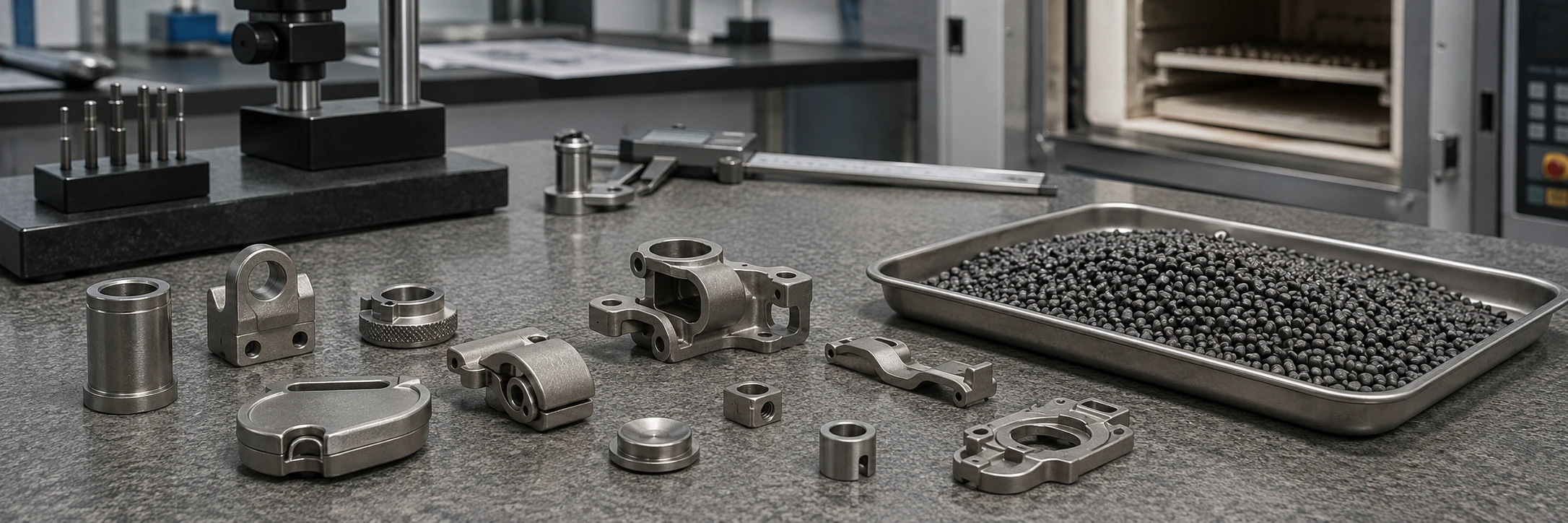
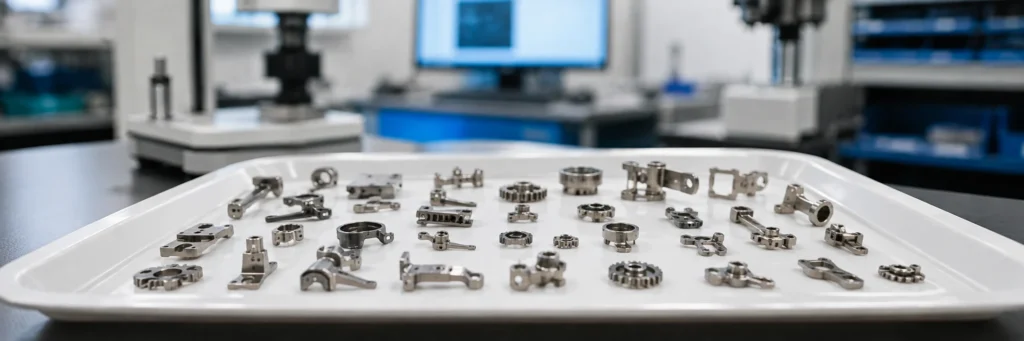
Engineering takeaway: The material family defines the starting direction, but final MIM performance depends on processing, density, surface condition and inspection.
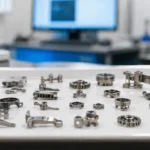
Representative engineering illustration.
Usually a good direction
Corrosion resistance, useful ductility, polished appearance and low magnetic response matter more than high hardness.
Needs explicit validation
Chloride exposure, magnetic permeability, density, cosmetic zones and passivation must be defined as measurable requirements.
Usually not the first choice
High contact hardness, severe sliding wear, cutting-edge retention or maximum heat-treated strength dominates the design.
Send for review
Provide the drawing, service environment, critical dimensions, surface expectations, test requirements and annual volume.
On This Page
- What austenitic stainless steel means in MIM
- Composition, density and properties
- How the MIM process changes the result
- Magnetic response and verification
- Applications and when the material family is a good fit
- 304, 316L and specialized grades
- Representative engineering scenario
- Common material-selection mistakes
- RFQ inputs
- Frequently asked questions
What Is Austenitic Stainless Steel and Why Does It Matter for MIM?
Austenitic stainless steel is defined by an austenitic, face-centered cubic metallurgical structure. That structure helps explain the material family’s characteristic ductility, toughness, formability and generally low magnetic response. Chromium creates the foundation for stainless corrosion resistance, while nickel, manganese and nitrogen can help stabilize the austenitic structure.
From a MIM material-selection perspective, the word austenitic is a starting classification rather than a finished-part specification. It indicates that the material should behave differently from martensitic stainless steels such as 420 or 440C and from precipitation-hardening grades such as 17-4 PH. It does not, by itself, establish final density, corrosion performance, magnetic permeability, surface finish or dimensional capability.
Austenitic Structure in Practical Terms
The structure generally supports useful ductility and toughness and does not rely on the same quench-and-temper hardening route used for martensitic stainless steels. Chemistry, grain structure, thermal history and secondary phases can still change the finished behavior.
Material Family vs Finished Part
The family classification helps narrow the material direction. The specific grade, prepared feedstock, debinding route, sintering condition, surface finish and acceptance plan determine whether the production component is suitable.
How Chromium, Nickel, Nitrogen and Manganese Affect the Alloy Family
- Chromium supports the passive surface behavior associated with stainless corrosion resistance.
- Nickel is widely used to stabilize the austenitic structure and support ductility and formability.
- Manganese can partially replace nickel in selected compositions and also supports austenite stability.
- Nitrogen can support austenite stability and strength in specialized stainless steel designs.
- Molybdenum, present in conventional 316L chemistry, is relevant when corrosion resistance is a stronger design driver.
These alloying directions establish the material family; service environment, porosity, crevices and contamination still control the finished-part corrosion result.
200-Series and 300-Series Austenitic Stainless Steels
The broad family includes both 200-series and 300-series stainless steels. The 300 series commonly relies on chromium and nickel, while many 200-series compositions replace part of the nickel with manganese and nitrogen. For MIM sourcing, that distinction is useful but should not become the only decision rule. The supplier must also confirm that the required powder or prepared feedstock route is available and suitable for the geometry, volume and validation plan.
Composition, Density and Properties That Matter in MIM Parts
General austenitic stainless steel properties establish expectations, but a sintered MIM component must be evaluated as a finished part. The MIM route starts with fine powder and binder in prepared feedstock, not with sheet, bar or machined billet.
After molding and debinding, the component densifies during sintering. Some residual porosity may remain, so a theoretical density associated with the alloy chemistry should not automatically become the acceptance value for a production part.
Quick Reference Values for 304L and 316L
The values below are material references from established alloy and powder suppliers. They help identify the grade family, but they are not automatic acceptance values for a finished MIM component.
| Reference Grade | Nominal Composition Direction | Reference Density | MIM Engineering Meaning |
|---|---|---|---|
| 304L | Cr 18.0–20.0%, Ni 8.0–12.0%, C up to 0.03% in the cited powder specification | About 7.9 g/cm³ for conventional 304/304L material | Use the composition to identify the alloy route. Define the finished sintered density, porosity and test method separately. |
| 316L | Cr 16.0–18.0%, Ni 10.0–14.0%, Mo 2.0–3.0%, C up to 0.03% in the cited powder specification | About 8.0 g/cm³ for conventional 316L material | Molybdenum supports the corrosion-focused grade direction, but the service environment and finished-part validation still control approval. |
Reference basis: The composition ranges are from Sandvik Osprey powder data for 304L and 316L. The conventional density references are from Outokumpu’s Core 304/304L and Supra 316L datasheets. A production MIM part requires a project-specific sintered-density and acceptance plan.

Engineering takeaway: XTMIM purchases prepared feedstock rather than mixing it in-house, so alloy availability, supplier documentation and the intended sintering route must be confirmed during RFQ review.
Chemical Composition and Austenite Stability
Chemical composition controls whether the desired austenitic structure remains stable through processing and use. Carbon, oxygen, nitrogen and other interstitial elements can be especially important in powder-based processing because the material passes through feedstock preparation, debinding and high-temperature sintering.
Approval should confirm the exact alloy designation, composition requirement, prepared feedstock route, final condition and any magnetic, corrosion or surface requirement. Process-route differences are then controlled through the finished-part acceptance plan.
Theoretical Density vs Sintered-Part Density
Theoretical density is a material reference without process-related porosity. A finished MIM component is created by sintering powder particles together. High density is normally desired for structural stainless steel components, but the final result depends on powder loading, particle characteristics, debinding stability, sintering cycle and geometry.
- Mechanical properties: Residual porosity can reduce the effective load-bearing area and influence strength, ductility and fatigue behavior.
- Corrosion behavior: Surface-breaking or connected porosity can create local conditions different from a smooth wrought surface.
- Inspection: Density results depend on the test method, sampling location and acceptance basis.
A drawing should therefore avoid copying a wrought-material density value and treating it as an automatic MIM acceptance threshold. The project team should define whether density is a qualification test, a routine lot-control test or an indirect process-control characteristic.
| Property Area | General Austenitic Direction | What Must Be Reviewed in MIM | Drawing or RFQ Input |
|---|---|---|---|
| Density | High-density stainless alloy family | Sintering, porosity and measurement method | Minimum value and test method, when required |
| Corrosion resistance | Generally favorable | Environment, porosity, surface and passivation | Media, concentration, temperature and exposure |
| Ductility | Often better than hardenable grades | Density, microstructure and final condition | Functional deformation or mechanical requirement |
| Hardness | Not the main advantage | Austenitic grades are not the standard high-hardness route | Hardness scale, location and target |
| Magnetic response | Usually low | Chemistry, ferrite, martensite and thermal history | Permeability limit and test method |
Translate the Material Name into a Part Acceptance Plan
Material selection becomes useful only when the requirement can be measured on the finished component. The following examples show how to replace broad wording with an RFQ or drawing requirement that can be reviewed before tooling.
| Requirement Area | Weak Wording | Better Engineering Definition | Evidence for Approval |
|---|---|---|---|
| Corrosion | “Use corrosion-resistant stainless steel” | Define the media, concentration, temperature, duration, cleaning cycle and whether crevices or trapped moisture are present. | Agreed material condition plus a finished-part or representative corrosion test when the risk justifies it. |
| Density | “Full density required” | State whether density is a qualification limit, routine lot-control value or a proxy for mechanical performance, and identify the test method. | Density measurement with defined sampling location and acceptance purpose. |
| Magnetic response | “Material must be non-magnetic” | Define the maximum permitted response, measurement condition, instrument and part location that affect function. | Finished-part permeability or functional test after the relevant secondary operations. |
| Surface condition | “Polished finish” | Mark cosmetic zones, permitted gate or witness areas, target roughness or approved visual sample, and any passivation requirement. | Surface inspection, roughness measurement or approved appearance sample. |
| Mechanical function | “High strength” | Define the actual load mode, critical section, permanent deformation limit, hardness target or functional cycle. | Project-specific mechanical or functional test rather than a generic datasheet value alone. |
Corrosion Resistance, Ductility and Toughness
Austenitic stainless steels are frequently selected when corrosion resistance and ductility are more important than maximum hardness. For MIM components, corrosion evaluation should include chloride or salt exposure, cleaning chemicals, trapped moisture, crevice-prone geometry, residual polishing compounds and the difference between as-sintered, machined, polished and passivated surfaces.
Selecting 316L does not automatically prove suitability for every wet, chloride-containing, chemical or regulated environment. Likewise, a polished appearance does not, by itself, confirm adequate corrosion resistance.
Why Austenitic Stainless Steel Is Not a High-Hardness Route
Conventional austenitic stainless steels are not hardened through the same heat-treatment mechanism used for 420, 440C or 17-4 PH. When the drawing requires high contact hardness, cutting-edge retention, rolling wear resistance or a hardened bearing surface, the team should review a martensitic, precipitation-hardening, low-alloy or more wear-oriented material route.
How the MIM Process Changes the Final Material Outcome
MIM does not simply reshape a wrought piece of stainless steel. It creates a component from prepared powder-and-binder feedstock through molding, debinding and sintering. Every stage can preserve or weaken the intended material behavior.
- Alloy chemistry
- Prepared feedstock
- Injection molding
- Debinding
- Sintering
- Density and microstructure
- Surface condition
- Finished-part inspection

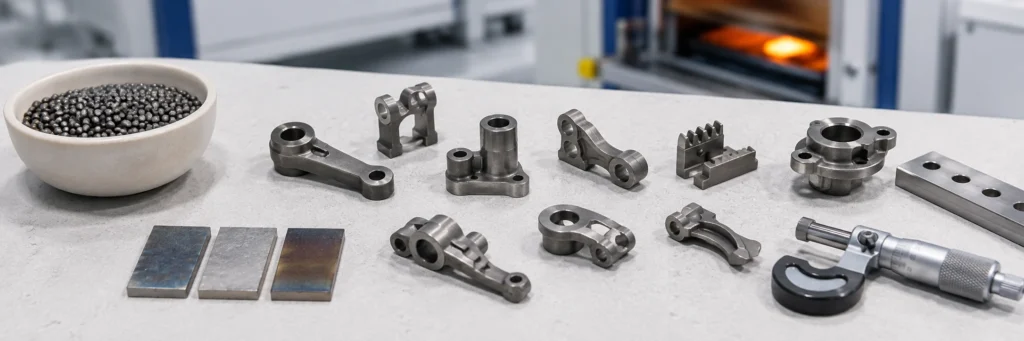
Engineering takeaway: Chemistry alone does not determine the final component; each MIM stage can affect density, microstructure, distortion and surface condition.
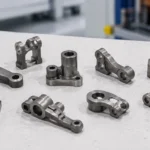
Representative engineering illustration.
Powder and Feedstock Chemistry
Powder chemistry, particle size distribution, morphology and oxygen content influence powder loading, feedstock flow and sintering behavior. Prepared feedstock availability and supplier documentation should be confirmed during RFQ review. XTMIM purchases prepared feedstock rather than producing it internally, so the selected route must be checked against material availability, project volume and validation requirements.
Debinding, Carbon Control and Contamination Risk
Debinding removes the binder before final densification. An unstable binder-removal route can contribute to internal defects, distortion or chemistry changes. Carbon and oxygen control may influence microstructure, inclusions and final performance.
Before tooling, review:
- thick-to-thin transitions that may complicate binder removal;
- enclosed or poorly vented geometry;
- contamination-sensitive surfaces;
- carbon or oxygen limits tied to the material requirement;
- whether the customer requires a specific sintered condition.
Sintering Density, Porosity and Microstructure
During sintering, powder particles bond and the part shrinks toward its final dimensions. Furnace profile, atmosphere, loading condition, support method and cooling route influence densification and microstructure. Depending on product risk, evidence may include density measurements, metallography, representative test specimens, corrosion tests, magnetic permeability checks or dimensional capability studies.
Not every project needs every test. The inspection plan should match the actual product risk rather than applying the most complex validation package to every component.
Cooling, Surface Finishing and Passivation
Cooling conditions can influence retained phases and therefore magnetic or corrosion-related behavior. Surface finishing also matters because as-sintered, machined and polished surfaces can behave differently. Passivation can support the stainless passive surface, but it cannot compensate for the wrong alloy, inadequate density, damaging contamination or crevice-prone design.
Final-Part Inspection Before Material Approval
A material should be approved at the level that matters to the product. Depending on the requirement, this may involve the finished part rather than only a generic supplier datasheet or tensile specimen. A practical plan may address alloy verification, final density, critical dimensions, surface roughness, corrosion exposure, permeability, hardness, mechanical behavior and secondary-operation validation.
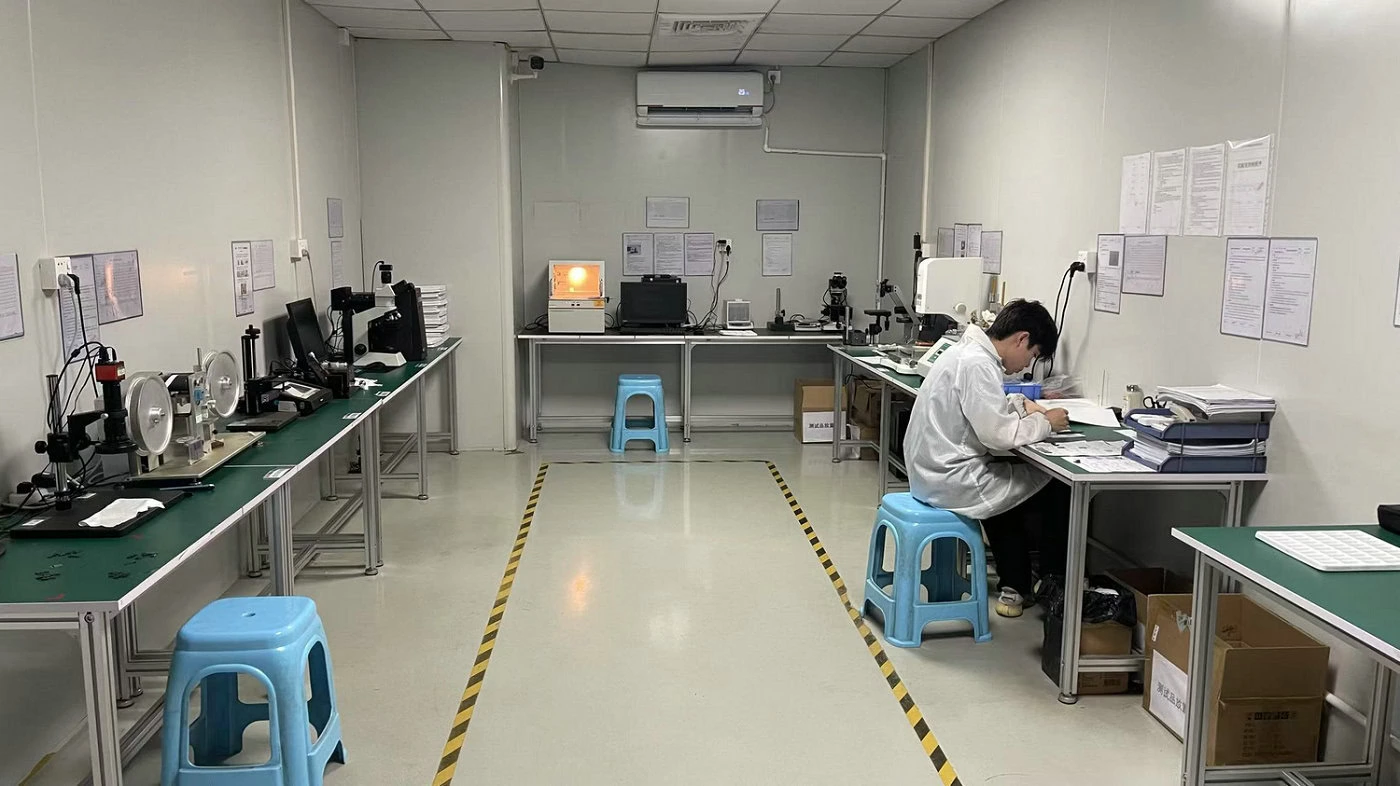
Engineering takeaway: Density, porosity, dimensions, surface condition and magnetic or corrosion requirements must be translated into measurable acceptance criteria appropriate to the project.
MIM Review Gates Before Tooling
Before the material callout is frozen, the engineering team should close five review gates. Each gate removes a different source of uncertainty and prevents a familiar alloy name from being used as a substitute for an actual production plan.
| Review Gate | What Must Be Confirmed | Why It Matters | Typical Output |
|---|---|---|---|
| 1. Material route | Exact grade, prepared feedstock availability, supplier documentation and required final condition | The grade may be technically attractive but commercially impractical or incompatible with the planned validation route. | Approved material direction and quote assumption |
| 2. Geometry and debinding | Wall transitions, enclosed volumes, ribs, bosses, polishing access and areas vulnerable to distortion | Geometry can control binder-removal stability, sintering support and the need for tool compensation. | DFM comments and risk list before tool release |
| 3. Sintering and support | Expected shrinkage behavior, support strategy, furnace route and critical datum relationship | Density and microstructure are only useful when the component also reaches the required dimensions and shape. | Process route, support concept and dimensional review plan |
| 4. Surface and secondary operations | Machining, polishing, passivation, coating, masking and cosmetic boundaries | Secondary operations can alter the surface, dimensions and magnetic response that the material was selected to provide. | Defined operation sequence and inspection points |
| 5. Acceptance evidence | Which characteristics are qualification-only, routine lot controls or final functional tests | Without an agreed evidence plan, both customer and supplier may interpret the same material requirement differently. | Inspection and validation matrix |
Is Austenitic Stainless Steel Magnetic?
Austenitic stainless steels are commonly described as non-magnetic because fully austenitic material normally has very low magnetic permeability. However, “non-magnetic” should not be used as an absolute, unmeasured guarantee.
Chemistry, retained ferrite, martensite, cold work, machining and thermal history can influence the response of the finished component. A hand-held magnet check may be useful for basic screening, but it is not a substitute for a defined permeability test when magnetic behavior affects product function.

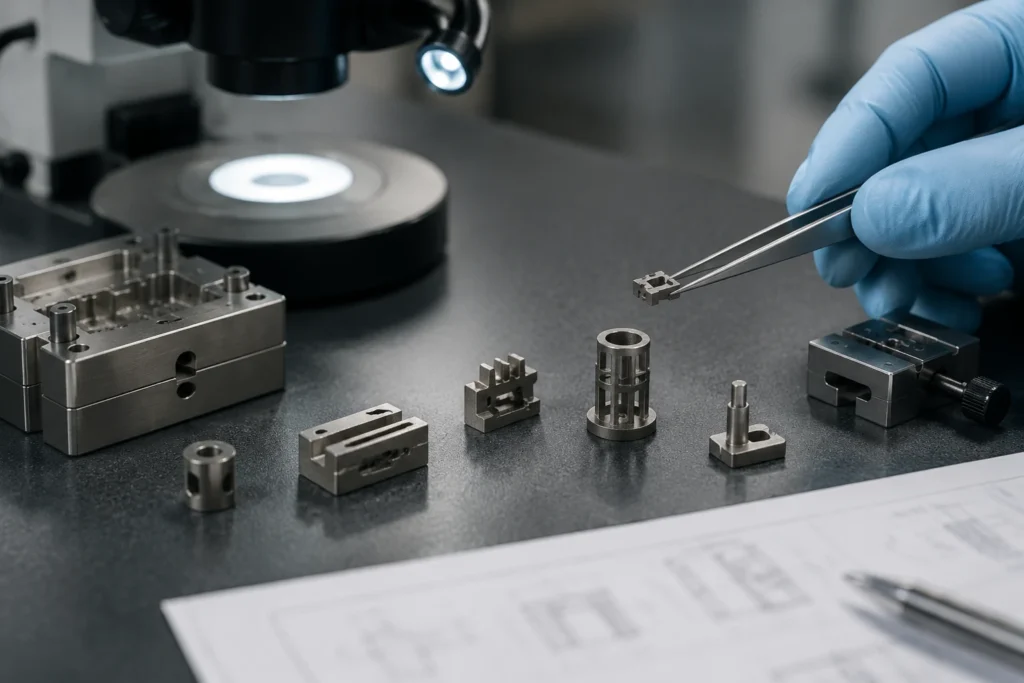
Engineering takeaway: Austenitic stainless steel is generally associated with low magnetic permeability, but the finished part still requires a defined test when magnetism affects function.
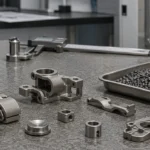
Representative engineering illustration.
When Low Magnetic Response Matters
This material direction may be useful for parts located near sensors, electronic or measuring devices, visible precision hardware where magnetic pickup is undesirable, or specialized components with a defined permeability limit.
How Finished MIM Parts Should Be Tested
The drawing or test specification should define the required magnetic property, maximum relative permeability when relevant, test instrument, measurement location, production condition, sampling plan and acceptance rule. For broader material comparisons, review the dedicated guidance on magnetic MIM materials.
Better drawing language: Instead of writing only “non-magnetic stainless steel,” define a project-specific maximum magnetic response, measurement method, test location and the condition of the part when it is tested.
A universal permeability limit should not be invented for the drawing. The threshold must come from the product function, sensor interaction or customer specification.
Applications and When Austenitic Stainless Steel Is a Good Fit for MIM Parts
Austenitic stainless steel is a strong MIM candidate when the geometry suits injection molding and the functional requirement prioritizes corrosion resistance, ductility, surface appearance or low magnetic response.
Corrosion-Driven Precision Components
The family may suit small parts exposed to indoor humidity, intermittent water contact, mild cleaning procedures or selected chemical environments after grade-specific review.
Cosmetic and Polished Components
MIM can be attractive for small housings, buttons, brackets, clips, decorative hardware, compact mechanisms, inserts and latches when cosmetic surfaces and gate-mark expectations are defined before tooling.
Ductility or Low Magnetic Response
The family can be useful when the part needs deformation tolerance, useful toughness or low magnetic response rather than high heat-treated hardness.
When Another Family Is Better
High hardness, severe sliding wear, cutting-edge retention or maximum heat-treated structural strength normally requires another stainless or low-alloy route.
| Project Requirement | Austenitic MIM Direction | Recommended Review |
|---|---|---|
| General corrosion resistance | Often suitable | Compare 304 and 316L against the real environment |
| Polished visible component | Often suitable | Confirm surface route and cosmetic acceptance |
| Low magnetic response | Possible direction | Define permeability and final-part test |
| High hardness or sliding wear | Usually not the first choice | Review 420, 440C or another wear-oriented route |
| Heat-treated structural strength | Usually not the first choice | Review 17-4 PH or another strength route |
| Simple low-volume geometry | MIM may not be economical | Compare machining or another process |
304, 316L and Specialized Austenitic Grades: How to Choose a Starting Direction
The purpose of an initial material review is not to identify a universal winner. It is to eliminate unsuitable routes and identify which grade deserves detailed validation.
When 304 May Be a Practical Starting Point
MIM 304 stainless steel may be reviewed for general stainless components where the environment is moderate, polished appearance matters, high hardness is not required and the prepared feedstock route is practical for the forecast volume.
When 316L Deserves Priority Review
MIM 316L stainless steel often deserves priority when corrosion resistance is a stronger design driver and the part may face moisture, cleaning agents or more demanding environmental exposure. It is not intended as a high-hardness route, and the actual service environment still controls the decision.
When a Nickel-Free High-Nitrogen Route May Be Relevant
A specialized nickel-free, high-nitrogen austenitic route such as MIM PANACEA stainless steel may be relevant when conventional nickel-containing stainless steels do not fit the product strategy. It is not a universal replacement for 316L; availability, sintering requirements, surface processing and finished-product validation must be reviewed.
| Starting Direction | Main Reason to Review | Main Limitation |
|---|---|---|
| 304 | General stainless appearance and moderate corrosion exposure | Demanding chloride conditions need caution |
| 316L | Corrosion resistance is a stronger driver | Not intended as a high-hardness route |
| Specialized high-nitrogen alloy | Nickel-free or specialized low-magnetic direction | Availability and process validation must be confirmed |
| Another stainless family | Strength, hardness or wear dominates | Different heat-treatment and inspection plan required |
For a direct grade-by-grade review, see the detailed 304 vs 316L comparison.

Engineering takeaway: The correct starting grade depends on the complete drawing and service requirement, not on a universal material ranking.
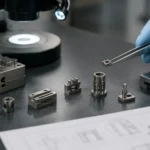
Representative engineering illustration.
Representative Engineering Scenario: A Small Visible MIM Component
Consider a small visible component with thin walls, several molded features, intermittent moisture exposure, a polished surface and a preference for low magnetic response. The part does not operate as a cutting edge, bearing race or high-load structural member.
An initial review may place 304, 316L and a specialized high-nitrogen alloy on the shortlist. The engineering team should then ask:
- Is the environment mild, chloride-containing or chemically demanding?
- Is low magnetic response only a preference, or is there a measurable maximum permeability?
- Which areas require polishing, and can they be accessed consistently?
- Could the geometry trap moisture or polishing residue?
- Which dimensions are sensitive to sintering shrinkage or distortion?
- Is the selected feedstock commercially practical for the forecast volume?
- Which finished-part tests will approve the material?
Engineering takeaway: The correct material cannot be selected from appearance or alloy reputation alone. The answer depends on the combined environmental, magnetic, surface, geometry and inspection requirements.
| Decision Point | If the Requirement Is Mild | If the Requirement Is Critical |
|---|---|---|
| Corrosion environment | 304 may remain a practical starting direction. | 316L or a specialized route needs service-specific validation. |
| Magnetic response | General low-response behavior may be sufficient. | A measurable finished-part limit and test condition are required. |
| Cosmetic surface | Standard finishing may be acceptable. | Cosmetic zones, polishing access and an approval sample should be defined. |
| Dimensional risk | General MIM tolerances may be workable. | Critical datums, support strategy and post-sintering machining need review. |
Common Mistakes When Selecting Austenitic Stainless Steel for MIM
Copying Wrought-Material Values
A wrought datasheet provides material context but does not automatically describe a sintered component. Values copied without test methods can create unrealistic acceptance requirements.
Treating All Austenitic Grades as Equivalent
304, 316L and specialized high-nitrogen alloys belong to the same family but solve different environmental, magnetic and sourcing problems.
Assuming Non-Magnetic Behavior
“Non-magnetic” is too vague for a critical drawing. Define the property, maximum value, measurement location and test method.
Ignoring Surface and Porosity
Surface-breaking pores, crevices, machining, polishing, contamination and passivation can all influence the practical corrosion result.
Selecting 316L for a Hardness Problem
316L is not the default answer for high hardness or severe sliding wear. The failure mechanism should direct the material family.
Assuming Grade Choice Proves Compliance
A familiar stainless steel grade does not automatically prove food-contact, skin-contact, medical, chemical or market-specific compliance.
What Should Be Included in an RFQ for an Austenitic Stainless Steel MIM Part?
A useful RFQ should allow the supplier to evaluate material, process, geometry and inspection together. When the material is not fixed, describe the functional requirement instead of writing only “stainless steel.”
- 2D drawing and 3D model
- Requested alloy or required functional behavior
- Service temperature and environmental exposure
- Water, chloride, salt, sweat or chemical contact
- Magnetic permeability or functional magnetic requirement
- Surface finish and cosmetic zones
- Critical dimensions and datum system
- Hardness, strength or ductility requirements
- Corrosion, surface or functional test method
- Estimated annual volume and batch size
- Machining, polishing, passivation, coating or assembly needs
- Required documents and inspection records
How XTMIM Uses These Inputs
Material Route Screening
The team checks whether the proposed grade and prepared feedstock route are available and whether another stainless or low-alloy family better matches the real failure risk.
Geometry and Tooling Review
Critical walls, transitions, undercuts, polishing access, datum strategy and distortion-sensitive features are reviewed before tooling. Most tool manufacturing is outsourced, while trial molding and tool-correction review can be supported internally.
Process Route Review
Injection molding and debinding are handled in-house. The sintering route is selected from the available batch vacuum and continuous furnace capabilities according to material and project requirements.
Inspection and Quote Assumptions
The review identifies which requirements need qualification evidence, routine controls, secondary operations or customer confirmation before price and lead-time assumptions are finalized.
Before requesting a firm material recommendation: send the drawing and 3D model together with the service environment, annual volume and the requirements that cannot be traded off. This prevents the review from defaulting to a familiar grade that may not solve the actual design problem.
Frequently Asked Questions
What is austenitic stainless steel?
Austenitic stainless steel is a stainless steel family characterized by an austenitic face-centered cubic structure. It is generally associated with good corrosion resistance, ductility, toughness and low magnetic response. Specific performance depends on the grade, processing route and finished condition.
Is austenitic stainless steel suitable for metal injection molding?
Yes. Austenitic stainless steels are established MIM materials. Suitability still depends on prepared feedstock availability, geometry, production volume, sintering requirements and final inspection.
What is the density of austenitic stainless steel?
As conventional material references, 304/304L is commonly listed at about 7.9 g/cm³ and 316L at about 8.0 g/cm³. A finished MIM part may retain residual porosity, so the project must separately define the required sintered density, test method and acceptance basis.
Is austenitic stainless steel magnetic?
It usually has very low magnetic permeability, but “non-magnetic” is not an absolute guarantee. Chemistry, ferrite, martensite, cold work and thermal history can affect the finished response. Functionally important requirements should be defined and tested.
Is 304 or 316L better for MIM parts?
Neither is universally better. 304 may be practical for moderate corrosion exposure and general stainless appearance. 316L usually deserves priority when corrosion conditions are more demanding. The decision should consider environment, surface, geometry, magnetic requirement and feedstock route.
Can austenitic stainless steel be hardened by heat treatment?
Conventional austenitic grades are not hardened through the standard quench-and-temper route used for martensitic stainless steels. If the component needs high heat-treated strength or hardness, another stainless or alloy-steel family should be reviewed.
Standards and Technical Reference Note
Material names and general property directions provide a starting point for engineering review. Final specifications should identify the applicable material standard, approved supplier data, finished condition, test method and acceptance criteria. MPIF Standard 35 may be reviewed together with the customer drawing and project-specific supplier documentation; no specific table or value from that standard is reproduced here.
Technical References
The following external references support the material-family, magnetic-response and MIM-process context discussed above. They do not constitute project-specific approval or endorsement.
- Metal Injection Molding Association — MIM Materials Range — MIM material families, common austenitic grades and MPIF Standard 35 direction.
- Outokumpu — Austenitic Stainless Steel Grades and Properties — austenitic structure, generally low magnetic response and the effect of cold work on magnetic behavior.
- Outokumpu — Handbook of Stainless Steel — stainless steel metallurgy, corrosion and grade-selection context.
- Outokumpu — Core Range Datasheet — conventional 304/304L physical-property reference, including density.
- Outokumpu — Supra Range Datasheet — conventional 316L physical-property reference, including density.
- Sandvik Osprey — 304L Austenitic Stainless Steel Powder — nominal 304L powder composition and MIM availability.
- Sandvik Osprey — PANACEA Austenitic Stainless Steel Powder — nickel-free high-nitrogen austenitic powder route for MIM.
- Sandvik Osprey — 316L Austenitic Stainless Steel Powder — 316L powder identity and MIM availability.
- Materials — Mechanical Properties and Grain Size of MIM 316L — peer-reviewed discussion of MIM processing, microstructure and mechanical behavior.
Review the Material Requirement Before MIM Tooling
Austenitic stainless steel can be effective for small complex components requiring corrosion resistance, ductility, surface appearance or low magnetic response. Before tooling, confirm the grade or functional requirement, service environment, density expectation, magnetic test, surface finish, critical dimensions and annual volume.