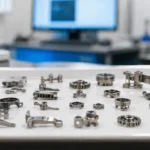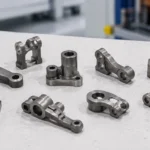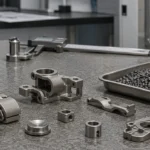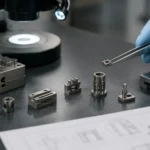
MIM Cost & RFQ Decisions When Secondary Machining Makes a Stamped Part Worth Reviewing for MIM A stamped part becomes worth reviewing for metal injection molding when the finished component route is no longer controlled mainly by the stamping operation. If machining, tapping, deburring, finishing, inspection, or assembly correction now drives cost or quality risk, …
MIM Cost & RFQ Decisions
When Secondary Machining Makes a Stamped Part Worth Reviewing for MIM
A stamped part becomes worth reviewing for metal injection molding when the finished component route is no longer controlled mainly by the stamping operation. If machining, tapping, deburring, finishing, inspection, or assembly correction now drives cost or quality risk, the project team should compare the complete manufacturing route instead of only comparing stamped blank price.
Quick Answer
A stamped part should be reviewed for MIM when post-stamping machining, deburring, tapping, surface finishing, inspection, or assembly correction becomes a major part of the finished component cost. MIM is not automatically better, but it may deserve review when repeated secondary operations are being used to create local thick features, precision faces, holes, bosses, standoffs, or functional surfaces that are difficult to achieve efficiently from sheet metal alone. The review should compare the finished component route, not just stamped blank price. The goal is not to replace stamping automatically, but to decide whether the finished route has become complex enough to justify a MIM feasibility review.
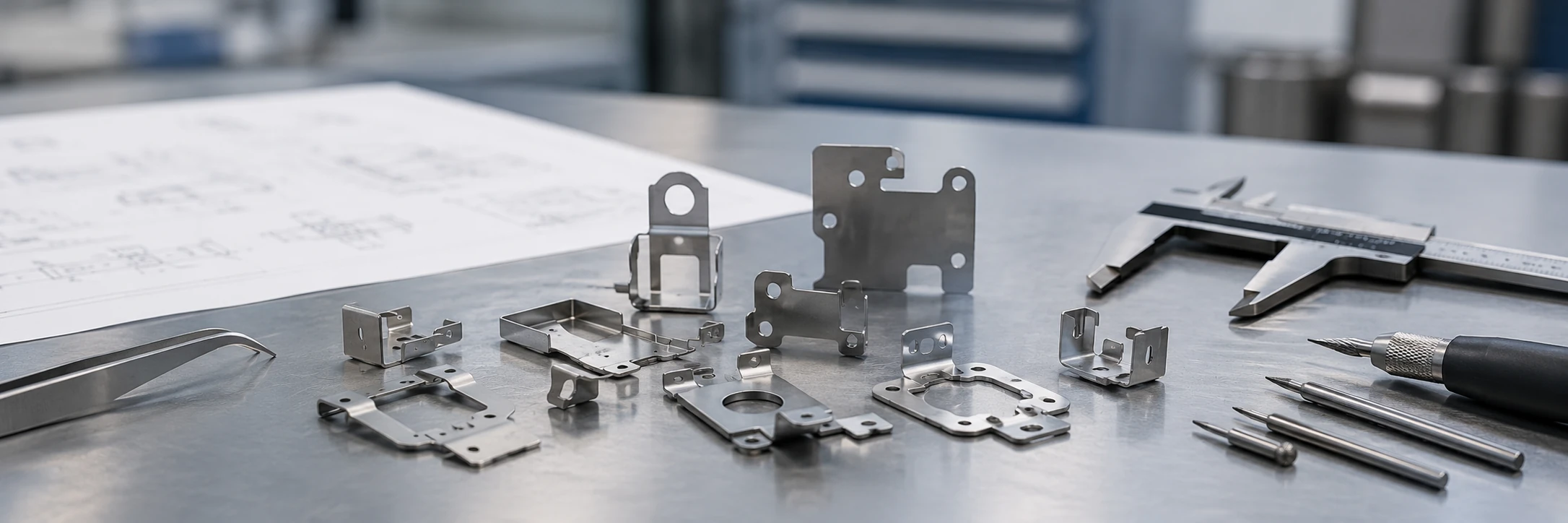
Core conclusion: Review the finished component route, not only the stamped blank price.
Why Secondary Machining Changes the Stamping vs MIM Review
Stamping is efficient when the part geometry fits sheet metal logic. Flat blanks, formed profiles, clips, covers, brackets, shields, spring-like features, and simple high-volume metal parts can often be produced quickly and economically by stamping. The review becomes more complex when the stamped part is not functionally complete after stamping.
A stamped blank may look competitive in a quotation because the forming operation is fast. However, that price may not include all later operations required to make the part functional. If the component still needs precision machining, hole finishing, tapping, edge cleanup, surface preparation, assembly correction, or repeated inspection, the buying team should separate the stamped blank cost from the finished component cost.
From an engineering review perspective, secondary machining changes the comparison because each additional operation adds another fixture, another handling step, another source of variation, another inspection requirement, and another opportunity for burrs, deformation, cosmetic damage, or rework. The risk is not only cost. The route can also become harder to control, harder to quote consistently, and harder to scale across batches.
Review principle: Do not compare an unfinished stamped blank against a near-net-shape MIM component. Compare the part as delivered, inspected, and ready for assembly.
This does not mean stamping is wrong. It means the project team should avoid comparing one process name against another process name. The better comparison is route against route: stamped blank plus every secondary operation versus a possible molded metal route with its own tooling, sintering, inspection, and any required finishing. For a broader process-level comparison, use the parent guide on MIM vs stamping process selection.
Secondary Machining Triggers That Make a Stamped Part Worth Reviewing
Not every stamped part with secondary work should move toward MIM. A simple punched hole, basic deburring process, or standard surface finish may still be normal for stamping. The stronger MIM review signal appears when several post-stamping operations are needed to create features that are more naturally produced by three-dimensional molding.
A stamped part becomes a stronger MIM review candidate when the drawing includes machined datums, local thick sections, tapped features, difficult burr-control areas, or assembly-critical surfaces that require repeated correction after forming. The trigger is usually a pattern: more operations, more handling, more inspection, and more risk of variation after the stamping press has already done its work.
| Post-stamping condition | Why it matters | MIM review signal |
|---|---|---|
| Multiple CNC-machined faces after stamping | The finished geometry depends on machining, not only forming. | Review MIM if these faces could be molded, reduced, or controlled with fewer setups. |
| Drilling or reaming after stamping | Hole quality or position may not be stable enough from stamping alone. | Review if holes are functional, repeated, tightly located, or linked to assembly alignment. |
| Tapping after stamping | Thread creation adds cost, handling, and quality checks. | Review if molded bosses or thicker local sections may simplify the design. |
| Heavy deburring or edge finishing | Burr control becomes a quality and labor issue. | Review if edge quality affects assembly, feel, sealing, motion, or downstream inspection. |
| Local thick bosses, standoffs, or reinforced areas | Sheet metal may need added parts, forming tricks, joining, or machining. | Review if one-piece MIM geometry could replace multiple operations or added components. |
| Flatness correction after forming | Springback or distortion is affecting assembly. | Review if the final function depends on stable 3D geometry rather than flexible sheet behavior. |
| Surface finishing after repeated handling | Extra operations may increase cosmetic risk and lead time. | Review if the process route is becoming too fragmented or handling-sensitive. |
| 100% inspection or sorting | Variation is already affecting production control. | Review if the current route needs excessive inspection to remain usable. |
The most important sign is not one single operation. It is the combination of operations, handling, and inspection needed to make the stamped part acceptable. If the process plan reads like stamping plus machining plus deburring plus finishing plus inspection, the project deserves a finished-cost review.
Engineering boundary: Normal finishing does not automatically justify MIM review. Route-changing secondary work does.
Light edge cleanup may not change the process decision. Repeated machining, tapping, datum correction, and 100% sorting can change the decision because they make the finished part depend on operations outside the stamping die.

Core conclusion: Multiple post-stamping operations create a stronger MIM review signal than one simple finishing step.
Finished Part Cost vs Stamping Unit Price
A common mistake in process selection is comparing only the stamped unit price against the MIM unit price. This can make stamping look better even when the finished component cost is no longer driven by stamping.
A more useful comparison includes the full route: stamped blank cost, post-stamping machining, drilling, tapping, reaming, grinding, deburring, surface finishing, inspection, sorting, assembly correction, scrap, rework, handling, and tooling cost over the expected annual volume.
For RFQ review, the question should be: what is the cost of a finished, inspected, usable part under each process route? If you need to understand how post-processing affects a MIM quotation from the opposite direction, see how secondary operations affect MIM RFQ cost.
| Cost factor | Stamping route question | MIM review question |
|---|---|---|
| Base forming cost | Is the stamped blank low cost at the expected volume? | Can MIM tooling and molding cost be justified by geometry and volume? |
| Secondary machining | How many operations are needed after stamping? | Can some features be molded near-net-shape? |
| Handling and fixtures | How many times is the part moved, located, clamped, or corrected? | Can the route reduce operation count and fixture dependency? |
| Edge quality | Is deburring routine or difficult to control? | Can the geometry reduce burr-sensitive edges or post-process variation? |
| Inspection burden | Is 100% inspection or sorting required? | Can a molded one-piece route reduce variation sources? |
| Assembly impact | Does the stamped part need joining, stacking, or correction? | Can one-piece geometry remove assembly tolerance stack-up? |
| Annual volume | Is volume high enough for stamping efficiency? | Is volume high enough to justify MIM tooling and validation? |
This comparison should remain practical. If the stamped part is simple and the secondary work is light, stamping may still be the better route. If the part requires repeated machining and inspection to meet its function, the team should request a MIM review before assuming the stamping route is still the lowest-cost solution.
For sourcing teams, the important RFQ habit is to normalize the comparison. Ask each supplier to quote the same finished condition: material, geometry, operation scope, surface condition, inspection level, and packaging state. Otherwise, one quote may represent an unfinished stamped blank while another quote represents a complete component ready for assembly.

Core conclusion: A low stamped unit price can become less meaningful when the finished route depends on many secondary operations.
When MIM May Help—and When Stamping Should Stay
MIM may help when the design is no longer only a sheet metal shape. This often happens when a stamped part starts to include features such as local thick areas, three-dimensional structural sections, molded-like bosses, precision surfaces, undercut-like geometry, or assembly features that are difficult to form from sheet material.
MIM is especially worth reviewing when the current stamped route is trying to create 3D functionality through a chain of secondary operations. In these cases, MIM may be able to mold more of the geometry into the part and reduce the number of follow-up steps. The value is not simply “MIM replaces stamping.” The value is that one molded metal component may reduce the need for repeated machining, joining, deburring, or correction.
However, stamping should stay in many cases. If the part is thin, flat, simple, and efficiently produced with progressive tooling, MIM may not improve the project. If the part needs sheet flexibility, spring behavior, very thin walls, or extremely high-speed blanking, stamping may remain the better choice. If the annual volume is too low or the geometry is too simple, MIM tooling may be difficult to justify.
A responsible review should therefore use three decisions instead of one: keep stamping, review MIM, or compare both routes before re-tooling. This keeps the article aligned with engineering reality and avoids treating MIM as an automatic replacement for stamping.

Core conclusion: The goal is not automatic conversion, but a practical boundary review between the existing stamped route and possible MIM production.
| Situation | Recommended direction | Reason |
|---|---|---|
| Thin, simple sheet metal part with limited secondary work | Keep stamping | Stamping is likely efficient and appropriate. |
| High-volume progressive die part with stable quality | Keep stamping | Existing route may already be optimized. |
| Stamped blank needs several CNC operations | Review MIM | Finished cost may be machining-driven. |
| Part requires tapped bosses, standoffs, or local thick sections | Review MIM | Geometry may fit molded metal logic better. |
| Heavy deburring affects quality or assembly | Review MIM | Edge control may be becoming a process risk. |
| Assembly variation comes from multiple stamped pieces | Review MIM or one-piece design review | Part integration may reduce tolerance stack-up. |
| Current process needs repeated inspection sorting | Review both routes | Variation and inspection burden should be compared. |
| Very low annual volume with simple geometry | Usually keep existing route | MIM tooling may not be justified. |
A good review does not force a process change. It identifies whether the current manufacturing route is still aligned with the part’s geometry, annual volume, functional requirements, and inspection burden. If the review proceeds toward MIM, the team may also need to evaluate secondary operations for MIM parts, but that process detail should remain separate from the initial stamping-route review.
What to Send for a Stamped Part MIM Review
A useful MIM review requires more than a part name or a simple request for quotation. The supplier needs to understand what the stamped part is doing, why secondary operations were added, and which features are function-critical.
For a stamped part with secondary machining, the most useful review package includes:
- 2D drawing with tolerances and datum requirements;
- 3D model if available;
- current material or target material;
- annual volume and expected production life;
- current manufacturing route;
- list of post-stamping operations;
- machining, drilling, tapping, grinding, or deburring notes;
- surface finish or coating requirements;
- inspection requirements and known sorting burden;
- functional surfaces and assembly interfaces;
- known problems such as burrs, distortion, rework, or sorting;
- target cost concern, if the issue is finished component cost.
The operation list is especially important. If the RFQ only says “stamped part,” the review may miss the real reason MIM is being considered. If the RFQ says “stamped part with CNC-machined datum, tapped holes, manual deburring, plating, and 100% inspection,” the engineering team can evaluate the finished component route more realistically.
When possible, mark the functional surfaces separately from non-critical surfaces. A feature that only affects appearance may lead to a different review conclusion than a machined datum, threaded location, sliding surface, sealing face, or assembly interface. This distinction helps prevent over-design and keeps the MIM review focused on what actually controls performance.
RFQ preparation note: Before submitting a stamped part for MIM review, organize the drawing, operation list, annual volume, material requirement, and inspection needs. The MIM RFQ preparation guide can help structure that information.

Core conclusion: The clearer the stamped part route and secondary operation list, the more useful the MIM review will be.
Composite Engineering Scenario for RFQ Review
In a composite engineering scenario, a small stamped bracket may begin as a low-cost formed component. After several design revisions, the same part now requires two drilled holes, one tapped feature, a machined reference surface, edge deburring, and manual inspection before assembly. The stamped blank remains inexpensive, but the finished part depends heavily on secondary operations.
In this situation, the project team should not assume that the original stamping decision is still optimal. The better next step is to compare the current finished stamping route with a possible MIM route. The review should ask whether a molded metal design could reduce machining steps, simplify inspection, or integrate local thick features into one component. If the answer is no, stamping stays. If the answer is yes, the team can continue into a more detailed MIM DFM and tooling review.
This type of review is most useful before re-tooling, before transferring suppliers, or before annual-volume changes make the existing secondary operation route more expensive to manage. It is also useful when quality teams are spending more effort sorting, deburring, or correcting the part than originally expected.
Practical Review Matrix for Stamped Parts With Secondary Machining
The following matrix can help decide whether to keep the existing stamping route, request a MIM review, or compare both before tooling or re-tooling.
| Review factor | Keep stamping | Review MIM | Compare both routes |
|---|---|---|---|
| Geometry | Thin, flat, or simple formed shape | 3D features, bosses, thick sections, complex surfaces | Mixed sheet and solid-feature requirements |
| Secondary operations | Minimal and stable | Multiple machining or finishing steps | Some operations are routine, others are cost drivers |
| Edge quality | Burrs are controlled by standard process | Burr removal is difficult or inspection-heavy | Edge quality affects some functional areas |
| Tolerance requirement | Stamping process controls required dimensions | Machining or sorting is needed to meet function | Critical features need closer review |
| Assembly impact | Part works as stamped | Part needs correction, joining, or adjustment | Assembly tolerance stack-up is a concern |
| Annual volume | High enough for efficient stamping | High enough to justify MIM tooling review | Volume supports both quotation paths |
| RFQ readiness | Current route is stable | Current route has cost or quality pain points | Review before re-tooling, supplier transfer, or annual volume ramp-up |
The safest decision is usually not made from one cost line. It comes from comparing the full manufacturing route, the number of operations, the inspection burden, and the functional requirements of the finished part.
Keep Stamping
The part is thin, simple, stable, and only needs limited secondary work. In this case, changing process may add complexity without solving a real manufacturing problem.
Review MIM
Secondary machining, deburring, tapping, inspection, or local thick features now drive the finished route. A MIM review can check whether more geometry can be molded into the part.
Compare Both Routes
The current stamping route works, but finished cost or quality risk deserves another engineering review before re-tooling, supplier transfer, or volume ramp-up.
Review the Finished Component, Not Only the Stamped Blank
Secondary machining does not automatically make MIM the better process. But it is one of the strongest signs that a stamped part deserves a more careful process review. When machining, tapping, deburring, finishing, inspection, or assembly correction becomes a major part of the final route, the project team should compare finished component cost instead of stamped blank price.
For simple thin sheet parts, stamping should often remain the preferred option. For small complex metal parts with local thick features, multiple precision surfaces, heavy post-processing, or assembly-related variation, MIM may deserve review before the next tooling decision.
The most useful review is not a debate about which process is better in general. It is a practical route review based on drawing geometry, annual volume, material, secondary operation scope, inspection burden, and the functional role of the finished component.
Next step: If your stamped part now requires machining, tapping, deburring, inspection sorting, or repeated post-stamping correction, submit your stamped part drawing for MIM review with the current operation list, annual volume, material requirement, and critical tolerance notes.
FAQ: Stamped Parts, Secondary Machining, and MIM Review
When should a stamped part be reviewed for MIM?
A stamped part should be reviewed for MIM when secondary machining, deburring, tapping, finishing, inspection, or assembly correction becomes a significant part of the finished component cost or quality risk. The review is especially useful when the design includes local thick features, precision surfaces, bosses, standoffs, or geometry that is difficult to form efficiently from sheet metal.
Does secondary machining always mean MIM will be cheaper?
No. Secondary machining only means the project should be reviewed more carefully. MIM still requires tooling, shrinkage control, material review, and process validation. Stamping may remain better for simple, thin, high-volume sheet metal parts with stable quality and limited secondary work.
Which post-stamping operations are strongest MIM review signals?
Strong signals include CNC-machined datums, drilled or reamed holes, tapping, heavy deburring, edge finishing, flatness correction, surface finishing after repeated handling, and 100% inspection or sorting. The risk increases when several of these operations appear together because the finished part becomes dependent on operations outside the stamping die.
When should stamping remain the preferred process?
Stamping should usually remain preferred when the part is a thin sheet metal shape, the geometry is simple, the progressive die route is stable, secondary operations are limited, and the annual volume supports efficient stamping production. Stamping can also remain better when the part requires sheet flexibility or spring-like behavior.
What should we send for a MIM review of a stamped part?
Send the 2D drawing, 3D model if available, material requirement, annual volume, current manufacturing route, secondary operation list, inspection requirements, critical tolerances, assembly function, and known production pain points. The more clearly the current post-stamping operations are described, the more useful the MIM review will be.
Can MIM reduce secondary machining after stamping?
MIM may reduce some secondary machining when functional geometry can be molded into the part, but it does not eliminate all finishing or inspection. The result depends on geometry, tolerance, material, volume, and validation requirements.
Compare the Finished Route Before the Next Tooling Decision
Send the drawing, annual volume, current operation list, secondary machining notes, and inspection requirements. A clearer review package helps compare the current stamped route against a possible MIM route more accurately.