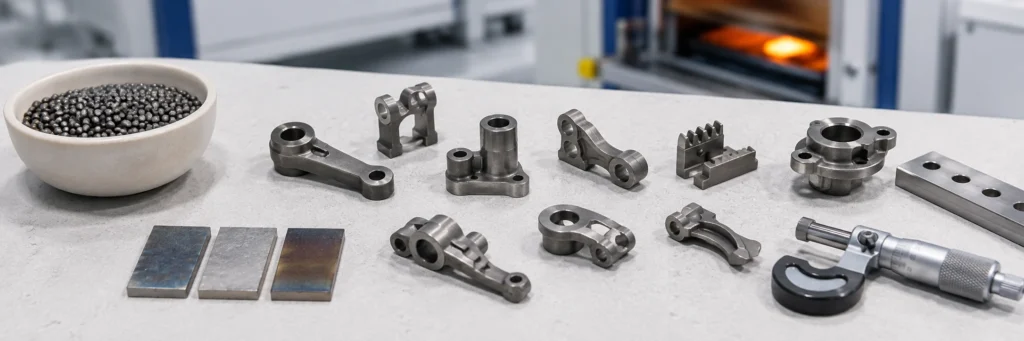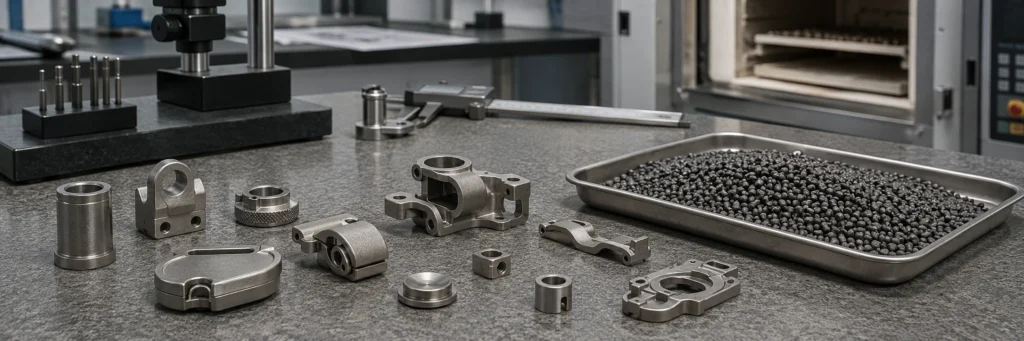
Secondary operations affect MIM RFQ cost when the required delivered part is not simply an as-sintered component. Metal injection molding can produce small, complex metal parts close to final shape, but some features still require additional control after sintering. Threads, precision bores, sealing faces, bearing surfaces, datum faces, cosmetic areas, heat-treated conditions, coated surfaces, and …
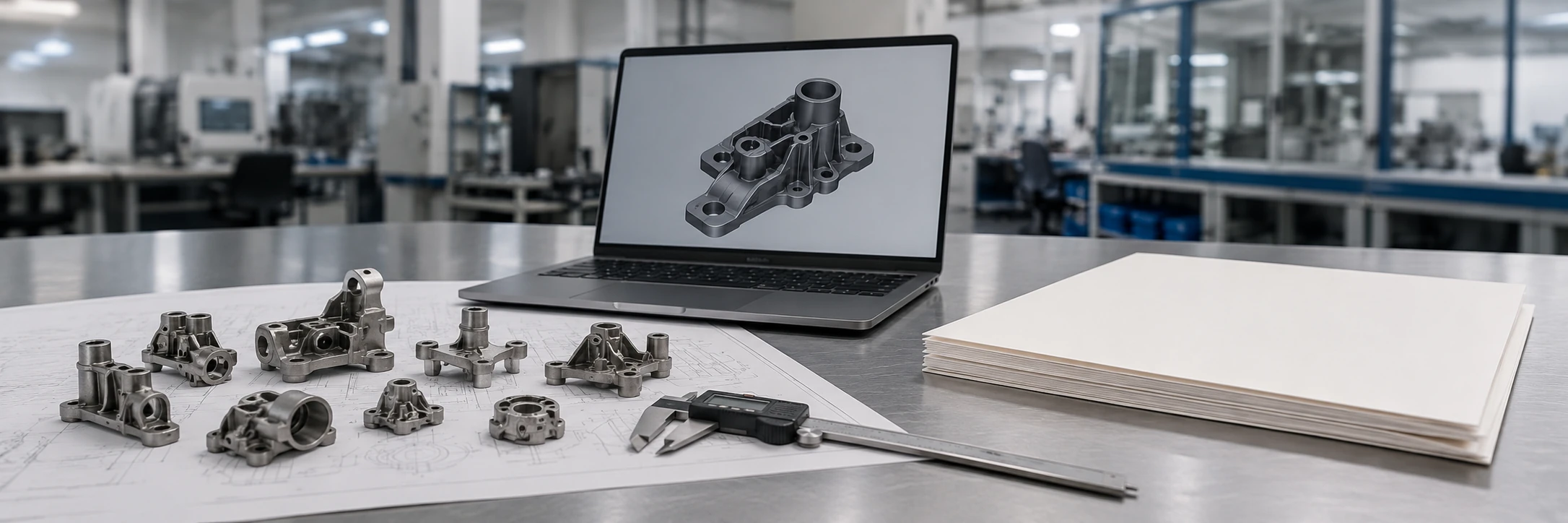
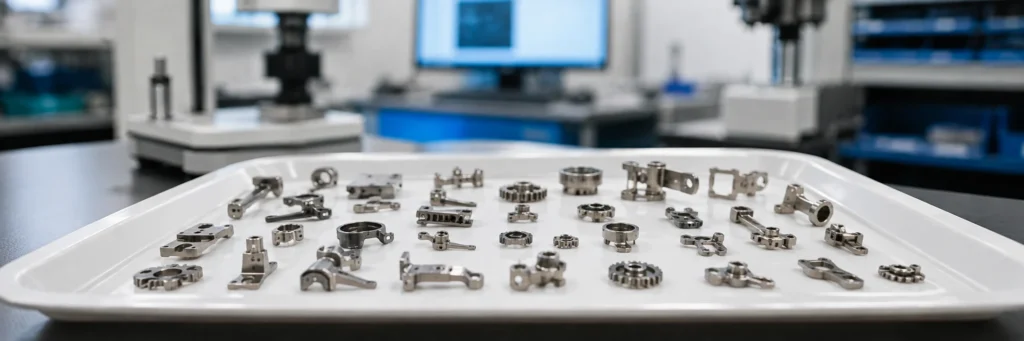
Secondary operations affect MIM RFQ cost when the required delivered part is not simply an as-sintered component. Metal injection molding can produce small, complex metal parts close to final shape, but some features still require additional control after sintering. Threads, precision bores, sealing faces, bearing surfaces, datum faces, cosmetic areas, heat-treated conditions, coated surfaces, and final inspection requirements can all change the quotation scope. For a sourcing manager, the practical question is not only “What is the MIM unit price?” but “What condition is included in that price?” An as-sintered quote may look lower because it excludes machining, tapping, grinding, heat treatment, coating, passivation, polishing, packaging protection, or final functional inspection. A finished-part quote is usually more useful for comparison because it reflects the condition needed for assembly, performance, and acceptance.
In practice, secondary operations are not automatically a problem. They become a cost issue when they are not defined early, when they apply to too many surfaces, or when different suppliers quote different delivered conditions. A clear RFQ should separate as-sintered features from post-processed features before tooling and cost review. For a broader view of tooling, unit price, production volume, inspection, and yield factors, see the full metal injection molding cost review.
As-Sintered Price Is Not Always the Finished-Part Price
```A common mistake in MIM sourcing is comparing an as-sintered price with a finished-part price as if they were the same thing. They are not.
An as-sintered MIM part has gone through injection molding, debinding, sintering, and basic dimensional or visual checks. For many MIM components, this condition may be sufficient. However, if the drawing requires tighter holes, machined datums, threads, flat sealing surfaces, specific hardness, corrosion protection, coating, passivation, polishing, or final CMM reporting, the real delivered part includes more than the sintered geometry.
From a purchasing perspective, this matters because a low initial quote may simply exclude the work needed to make the part usable. It may also create confusion later when engineering, quality, and purchasing teams discover that the quoted scope does not match the final acceptance condition.

A lower as-sintered quote may exclude secondary operations required for the final delivered part, such as machining, coating, heat treatment, or inspection after finishing.
| Quote Type | What It Usually Includes | What May Be Missing | Buyer Risk |
|---|---|---|---|
| As-sintered quote | Molding, debinding, sintering, basic inspection | Machining, coating, heat treatment, final functional inspection | Later cost increase after technical review |
| Finished-part quote | Required secondary operations and final inspection | Fewer hidden scope gaps if clearly defined | Higher apparent unit price but better comparison value |
| Undefined quote | Unclear process scope | Most post-sintering requirements may be excluded | False price comparison between suppliers |
The real question is not whether one supplier is cheaper. The real question is whether both quotes include the same final delivered condition.
If a buyer sends only a 3D model and estimated volume, the supplier may assume an as-sintered quotation. If the 2D drawing later shows reamed holes, threaded features, passivation, a polished visible surface, or inspection after coating, the RFQ cost can change. This does not mean the first quote was dishonest; it means the quotation scope was incomplete.
```Which Secondary Operations Usually Change MIM RFQ Cost?
```Secondary operations change RFQ cost because they add processing time, fixtures, tools, inspection steps, batch handling, outsourced finishing, or yield risk. Some operations affect every part. Others affect only selected functional surfaces. The cost impact depends on how much of the part requires post-processing and how tightly the final condition must be controlled.
For a deeper explanation of post-sintering process categories, see MIM secondary operations after sintering. External industry guidance from MIMA also recognizes that MIM parts may be machined, tapped, drilled, sized, ground, welded, heat treated, or otherwise post-processed when tighter features or improved properties are required. This article focuses on how those requirements affect RFQ cost and quotation scope.
| Secondary Operation | Why It May Be Needed | How It Affects RFQ Cost | RFQ Information Needed |
|---|---|---|---|
| Machining / milling | Datum faces, mating surfaces, critical profiles, local tight features | Fixture design, cycle time, tool wear, dimensional inspection | Critical dimensions, datum scheme, tolerance class |
| Tapping / threading | Internal or external threaded features | Tool breakage risk, thread gauge inspection, possible burr control | Thread size, depth, fit requirement, thread location |
| Reaming / drilling | Precision bores, pin holes, bearing fits, assembly holes | Added operation, gauge check, burr removal, positional control | Hole tolerance, mating shaft or pin information, inspection method |
| Grinding / lapping | Sealing faces, flatness, precision surfaces | Slower process, flatness control, surface inspection | Flatness requirement, roughness expectation, sealing function |
| Sizing / coining | Local dimensional correction after sintering | Dedicated sizing tool, press operation, repeatability control | Target dimension, allowable deformation, feature priority |
| Heat treatment | Hardness, strength, wear resistance, spring or locking function | Batch process, distortion risk, hardness testing | Material grade, hardness target, application load, acceptance criteria |
| Polishing / tumbling | Cosmetic surface, tactile surface, edge break, burr reduction | Media selection, labor, consistency control, possible dimensional influence | Visible surface map, roughness expectation, cosmetic standard |
| Passivation / coating / PVD | Corrosion resistance, wear resistance, appearance, color, surface protection | Masking, coating thickness control, outsourced or batch finishing, final inspection | Coating type, thickness if specified, masking area, corrosion or appearance need |
| Assembly | Pins, inserts, subcomponents, pre-assembled units | Labor, assembly fixture, functional check | Assembly drawing, fit requirement, torque or pull-out needs |
| Final inspection | Acceptance after finishing rather than before finishing | CMM time, gauges, reports, sampling plan, inspection labor | CTQ dimensions, report type, final inspection condition |
In production, a single small operation may not look expensive by itself. The cost changes when that operation is repeated across every part, requires a dedicated fixture, creates inspection burden, or must be performed after another finishing step.
For example, one reamed hole may be manageable. Four tightly controlled bores, two threaded holes, a ground sealing face, passivation, and 100% inspection after finishing can significantly change both unit cost and lead time.

MIM secondary operation cost is often driven by functional bores, threads, mating surfaces, sealing faces, and visible areas, not by the whole part equally.
How Secondary Operations Affect Unit Cost, Lead Time, and Quote Comparability
```Secondary operations affect more than unit price. They can change tooling planning, production routing, inspection workload, lead time, and supplier comparison. For sourcing teams, this is often more important than the cost of one individual operation.
Unit Cost Impact
Secondary operations increase unit cost when they are applied to every part or when they require slow, controlled, or manual work. Machining a single datum may be a manageable cost. Machining multiple surfaces, tapping several holes, polishing all visible areas, applying coating with masking, and performing 100% final inspection can change the economics of the project.
The strongest cost driver is usually not the name of the operation. It is the combination of how many features require the operation, whether the operation is local or full-part, whether a fixture is needed, whether the step is manual, semi-automatic, or batch-based, whether the part must be re-inspected after finishing, and whether yield risk increases after the operation.
Lead Time Impact
Heat treatment, coating, passivation, PVD, plating, polishing, and special cleaning may be batch operations. If a step is outsourced or requires queue time, it may affect delivery schedule. Even when the unit cost impact is acceptable, lead time may become a project risk.
Finished surfaces may also need protective packaging. A polished or coated part may require more careful handling than an as-sintered component. If packaging is not considered in the RFQ, damage or cosmetic disagreement can appear later.
Quote Comparability Impact
Two MIM quotes may look different because they include different scopes. One supplier may include reaming, tapping, heat treatment, passivation, final inspection, and protective packaging. Another may quote only the as-sintered part.
| Cost Area | Secondary Operation Impact | Buyer Review Point |
|---|---|---|
| Unit cost | Added processing per part | Is the operation applied to every part or only selected features? |
| Tooling planning | Machining stock, datum access, feature protection | Was secondary operation strategy reviewed before mold design? |
| Lead time | Batch finishing, outsourcing, extra inspection | Is finishing included in the delivery schedule? |
| Inspection | Verification after the final operation | Is inspection before or after finishing? |
| Quote comparison | Different suppliers may include different delivered conditions | Are all quotes based on the same scope? |
| Quality risk | Distortion, coating thickness, surface damage, fixture marks | Are acceptance conditions clearly defined? |
The lowest unit price is not always the lowest finished-part cost. A complete quote may look higher at first, but it can be more reliable for project planning if it includes the true delivered condition.
```How to Reduce Secondary Operation Cost Without Increasing Quality Risk
```The goal is not to remove all secondary operations. The goal is to use them only where they create functional, assembly, performance, or acceptance value. For broader design-related cost control, see design for MIM cost control.
| Cost-Control Method | Why It Helps | Engineering Boundary |
|---|---|---|
| Machine only functional surfaces | Reduces unnecessary CNC time | Non-functional surfaces must still meet drawing and handling needs |
| Separate critical and non-critical dimensions | Prevents over-tolerancing | Critical-to-function dimensions still need proper control |
| Define visible and non-visible surfaces | Limits cosmetic finishing scope | Hidden surfaces should not carry unnecessary appearance requirements |
| Confirm coating thickness early | Prevents assembly interference | Coated functional fits may need dimensional adjustment |
| Use as-sintered condition where acceptable | Preserves MIM near-net-shape advantage | Must be confirmed by tolerance, function, and inspection needs |
| Review secondary operations before tooling | Avoids late redesign or fixture difficulty | Tooling, allowance, and datum strategy should be checked early |
From a design review perspective, the most effective approach is to classify features before quotation:
- Features that can remain as-sintered.
- Features that need local machining or sizing.
- Features that need surface finishing or coating.
- Features that require final inspection after finishing.
- Features that may need redesign to reduce secondary operation burden.
This helps the buyer avoid two opposite mistakes: over-processing every feature or under-defining the few features that actually control function.
Composite Field Scenario for Engineering Training
- What problem occurred
- A part drawing applied a tight general tolerance to almost all dimensions, even though only two surfaces controlled assembly and one hole controlled alignment.
- Why it happened
- The drawing was transferred from a machined prototype without separating functional dimensions from non-critical geometry.
- What the real system cause was
- The RFQ treated the MIM part like a CNC-machined component instead of using MIM near-net-shape logic with selective post-processing.
- How it was corrected
- The drawing was reviewed to identify critical dimensions, non-critical dimensions, and features suitable for as-sintered delivery. Only the functional hole and two mating surfaces were assigned tighter control.
- How to prevent recurrence
- Before RFQ, review the drawing with the supplier and separate functional tolerances from general geometry. Do not apply CNC-style tolerance expectations to every MIM feature unless the application truly requires it.
What Buyers Should Define Before Sending a MIM RFQ
```A useful MIM RFQ should define more than material and quantity. If secondary operations may be involved, the supplier needs enough information to quote the final delivered part. For a complete quotation input checklist, see the MIM RFQ preparation guide.

A complete MIM RFQ should include drawing requirements, material, annual volume, secondary operations, surface condition, and final inspection expectations.
| RFQ Item | Why It Matters for Secondary Operation Cost |
|---|---|
| 2D drawing | Shows tolerances, datums, surface notes, inspection conditions, and critical features |
| 3D CAD file | Supports geometry review, tooling review, and feature access evaluation |
| Material grade | Affects sintering behavior, heat treatment suitability, corrosion resistance, and coating selection |
| Annual volume | Affects tooling amortization, recurring finishing cost, and production routing |
| Critical dimensions | Separates as-sintered features from machined or inspected features |
| Threads and bores | Determines tapping, drilling, reaming, gauges, and burr control |
| Functional surfaces | Identifies machining, grinding, polishing, coating, or protection needs |
| Visible surfaces | Determines cosmetic finishing, polishing, color consistency, and packaging protection |
| Heat treatment need | Affects hardness, strength, distortion risk, testing, and batch control |
| Coating / passivation / PVD | Affects masking, surface preparation, thickness, corrosion protection, and appearance |
| Inspection requirement | Determines whether final inspection is included after finishing |
| Packaging requirement | Protects coated, polished, or cosmetic surfaces during shipment |
If the drawing is not final, buyers can still request an engineering review. In that case, the RFQ should clearly say which areas are still open for supplier feedback. This is better than hiding uncertainty and forcing the supplier to guess.
A strong RFQ does not need to be perfect. It needs to show the supplier what the part must do, which features are critical, what final condition is expected, and what annual volume is being considered.
```How to Compare MIM Quotes When Secondary Operations Are Included
```When secondary operations are involved, a buyer should compare quote scope before comparing price. This is especially important when evaluating overseas suppliers, because quotation formats, included services, inspection assumptions, and finishing responsibilities may differ.

Two MIM quotes should be compared only after confirming the same delivered condition and included secondary operations.
Use the following checklist before deciding which quote is truly lower.
| Quote Comparison Question | Why It Matters |
|---|---|
| Is the quote based on as-sintered or finished condition? | Prevents false low-price comparison |
| Are machining, tapping, drilling, or reaming included? | Threads and critical holes often change cost |
| Is heat treatment included? | Affects batch cost, hardness testing, and distortion control |
| Are coating, passivation, PVD, polishing, or tumbling included? | Surface requirements may require masking, outsourcing, or added inspection |
| Is inspection done after secondary operations? | Inspection before finishing may not represent final function |
| Are fixtures, gauges, or special packaging included? | These may affect project cost or recurring cost |
| Are inspection reports required? | CMM reports, hardness checks, coating checks, or surface checks can affect inspection cost |
| Is rework or yield allowance considered? | Some finishing steps may create scrap or rework risk |
| Is lead time based on the complete route? | A quote may exclude finishing queue time or outsourced process time |
The most useful comparison is not “Supplier A is lower than Supplier B.” The useful comparison is “Both suppliers are quoting the same final part condition, using the same material, same annual volume, same tolerance expectations, same secondary operations, and same inspection scope.”
Composite Field Scenario for Engineering Training
- What problem occurred
- A buyer received two MIM quotes for the same part. One quote was lower by a noticeable margin, but the lower quote excluded heat treatment, passivation, and final inspection after finishing.
- Why it happened
- The buyer compared unit price before comparing quotation scope.
- What the real system cause was
- The RFQ did not require each supplier to list included and excluded secondary operations.
- How it was corrected
- The buyer requested a revised quote table showing as-sintered part cost, machining cost, heat treatment cost, passivation cost, inspection scope, tooling cost, and lead time assumptions.
- How to prevent recurrence
- When requesting MIM quotes, ask each supplier to specify whether the quote is for as-sintered parts or finished parts, and require a clear list of included secondary operations.
When Too Many Secondary Operations May Reduce the Cost Advantage of MIM
```MIM is most valuable when it converts small, complex metal geometry into repeatable production with limited post-processing. If a part requires extensive machining on most surfaces, multiple tight bores, full-surface polishing, several masking steps, heat treatment, coating, 100% inspection, and special packaging, the cost advantage may become weaker.
This does not automatically mean MIM is wrong. It means the project should be reviewed more carefully. A high secondary operation burden may indicate one of four situations:
- The part is still suitable for MIM, but the buyer must compare finished-part cost rather than as-sintered cost.
- The drawing needs DFM review to reduce unnecessary post-processing.
- Some features should be redesigned for MIM instead of copied from a CNC prototype.
- Another process may need comparison if most surfaces require machining or finishing.
From an engineering standpoint, too many secondary operations can point to poor feature classification. The drawing may not separate functional features from non-functional geometry. It may also apply tight tolerances or cosmetic requirements to surfaces that do not need them.
A better approach is to ask: which features must control assembly, sealing, wear, appearance, hardness, or inspection? Those features may justify secondary operations. Other features may be better left as-sintered if they do not affect function. For broader process and project cost review, return to the main MIM cost review.
```Final RFQ Review Before Tooling
```Before MIM tooling begins, the buyer and supplier should agree on the final delivered condition. This is the point where secondary operation cost should be clarified, not after tooling, sampling, or production launch.
A practical final review should confirm:
- Which features can remain as-sintered.
- Which features require machining, tapping, drilling, reaming, grinding, sizing, polishing, coating, passivation, PVD, heat treatment, or assembly.
- Which dimensions are critical to function.
- Which surfaces are visible, cosmetic, sealed, coated, or protected.
- Whether final inspection is required after secondary operations.
- Whether hardness, coating, surface finish, or corrosion-related requirements are part of acceptance.
- Whether special packaging is needed for finished surfaces.
- Whether all suppliers are quoting the same delivered condition.
The most reliable MIM RFQ is not the one with the shortest price line. It is the one that defines the part clearly enough for engineering review, tooling planning, secondary operation planning, inspection planning, and production cost comparison.
```Request a Finished-Part MIM RFQ Review
If your MIM project requires machining, tapping, precision holes, heat treatment, passivation, coating, PVD, polishing, cosmetic surfaces, or final inspection after finishing, the RFQ should be reviewed as a finished-part project rather than only an as-sintered part.
Send your 2D drawing, 3D CAD file, material grade, critical dimensions, surface finish notes, heat treatment requirements, coating or passivation requirements, inspection expectations, annual volume, and application background. The XTMIM engineering team can review which features may remain as-sintered, which features may need secondary operations, and how those requirements affect tooling planning, RFQ cost, lead time, and final inspection.
FAQ: Secondary Operations and MIM RFQ Cost
```Do secondary operations always increase MIM cost?
Usually, yes, but the cost impact depends on the operation type, number of features, inspection requirements, fixture needs, and whether the operation is local or applied to the whole part. A small local machining step may be manageable. Multiple precision features, coating, heat treatment, polishing, and final inspection can significantly change finished-part cost.
Can MIM parts be used as-sintered without machining?
Yes. Many MIM parts can be used in the as-sintered condition when the geometry, tolerance, surface condition, and function are suitable. Machining or other secondary operations are usually considered when the part has critical holes, threads, sealing faces, bearing surfaces, tighter datums, specific surface finish, heat treatment needs, or coating requirements.
Should secondary operations be included in a MIM RFQ?
Yes. If secondary operations are needed, they should be included in the RFQ before quotation. Otherwise, the supplier may quote only the as-sintered part. This can make the first price look lower but create cost changes later when machining, heat treatment, coating, passivation, polishing, or final inspection is added.
Why do two MIM suppliers quote different prices for the same part?
One common reason is different quotation scope. One supplier may include machining, tapping, heat treatment, coating, passivation, inspection after finishing, and protective packaging. Another may quote only the as-sintered component. Buyers should compare the included delivered condition before comparing unit price.
How can I reduce secondary operation cost in a MIM project?
The best approach is to apply secondary operations only where they support function, assembly, appearance, or acceptance. Machine only critical surfaces, avoid tight tolerances on non-critical dimensions, define visible surfaces separately, confirm coating thickness early, and review the drawing before tooling.
Does heat treatment affect MIM RFQ cost?
Yes. Heat treatment can affect batch cost, lead time, hardness testing, distortion risk, and inspection requirements. The RFQ should define material grade, target hardness or performance requirement, application condition, and whether final inspection is required after heat treatment.
When should I request a MIM secondary operation cost review?
Request a review before tooling if the part has threads, tight holes, sealing faces, flatness requirements, coating, passivation, heat treatment, cosmetic surfaces, or final inspection reports. Early review helps identify which features can remain as-sintered and which require post-processing.
Author / Engineering Review
Reviewed by XTMIM Engineering Team
This article was prepared for sourcing managers, engineers, and project teams evaluating MIM RFQ cost. The review focuses on process suitability, material selection, DFM considerations, tooling risk, sintering-related dimensional control, secondary operation planning, tolerance strategy, final inspection requirements, and production feasibility.
The content is intended to support early engineering and purchasing decisions. Final cost, tolerance capability, secondary operation route, inspection scope, and production feasibility should be confirmed through project-specific drawing review, material review, tooling review, sampling, and supplier quotation.
Standards and Technical References Note
Secondary operations for MIM parts should be evaluated through a combination of supplier process capability, drawing requirements, application needs, and recognized technical references.
- MIMA Secondary Operations Guidance: Relevant because it explains that MIM parts can be machined, tapped, drilled, sized, ground, welded, heat treated, or otherwise post-processed when tighter features or improved properties are required. This supports the article’s engineering position that secondary operations are sometimes necessary but should be reflected in RFQ cost and delivered condition. View MIMA resource.
- MPIF Standard 35-MIM: Relevant for general MIM material and performance expectations. It may support material and property discussions, but it should not replace project-specific drawing review, tolerance review, heat treatment review, or supplier process validation.
- ASTM A967 / A967M: Potentially relevant when stainless steel passivation is specified by the customer drawing or application requirement. It should only be referenced when passivation is part of the actual project requirement.
- Customer Drawing and Inspection Requirements: The most important project-level reference. The drawing defines tolerance, datum, surface condition, coating notes, heat treatment notes, and inspection requirements. Standards can guide evaluation, but the final RFQ must be based on the actual part, material, geometry, volume, and acceptance condition.